
Last updated November 18, 2026
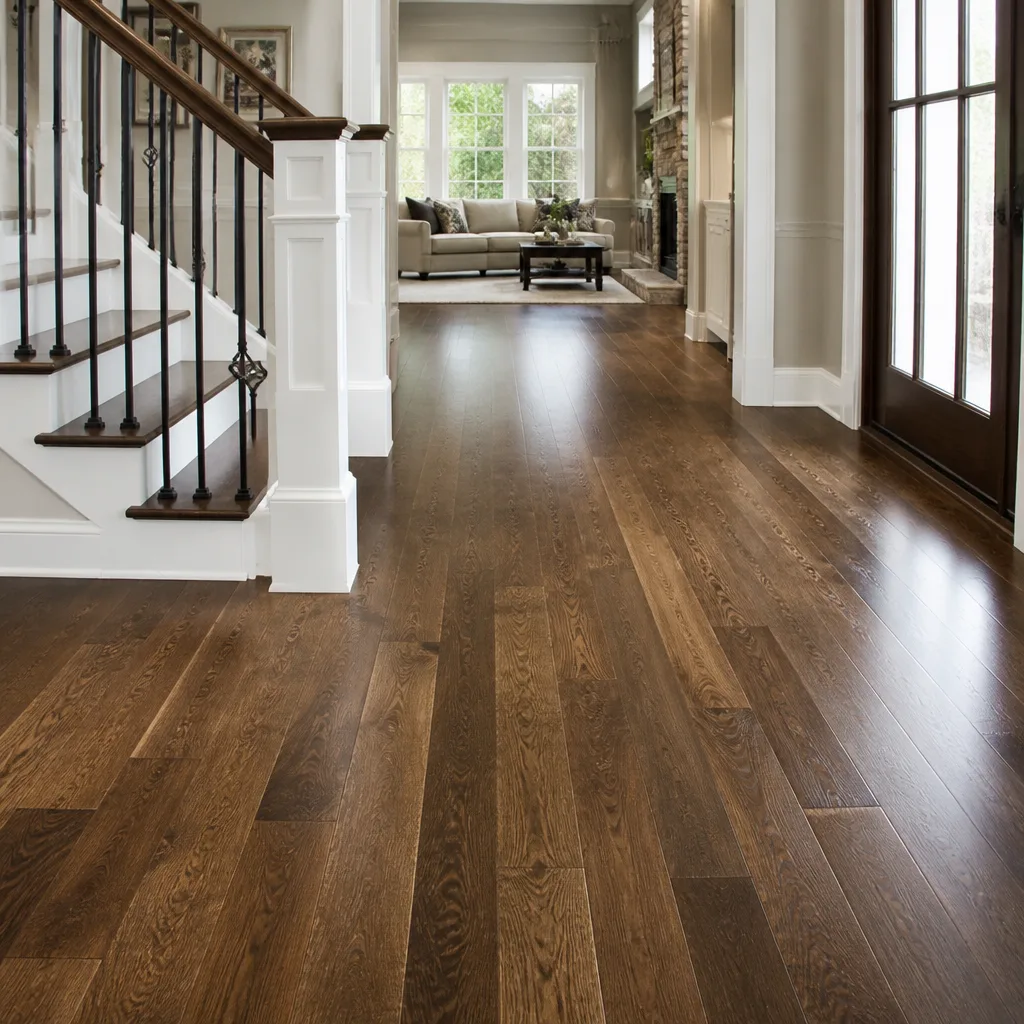 Hardwood
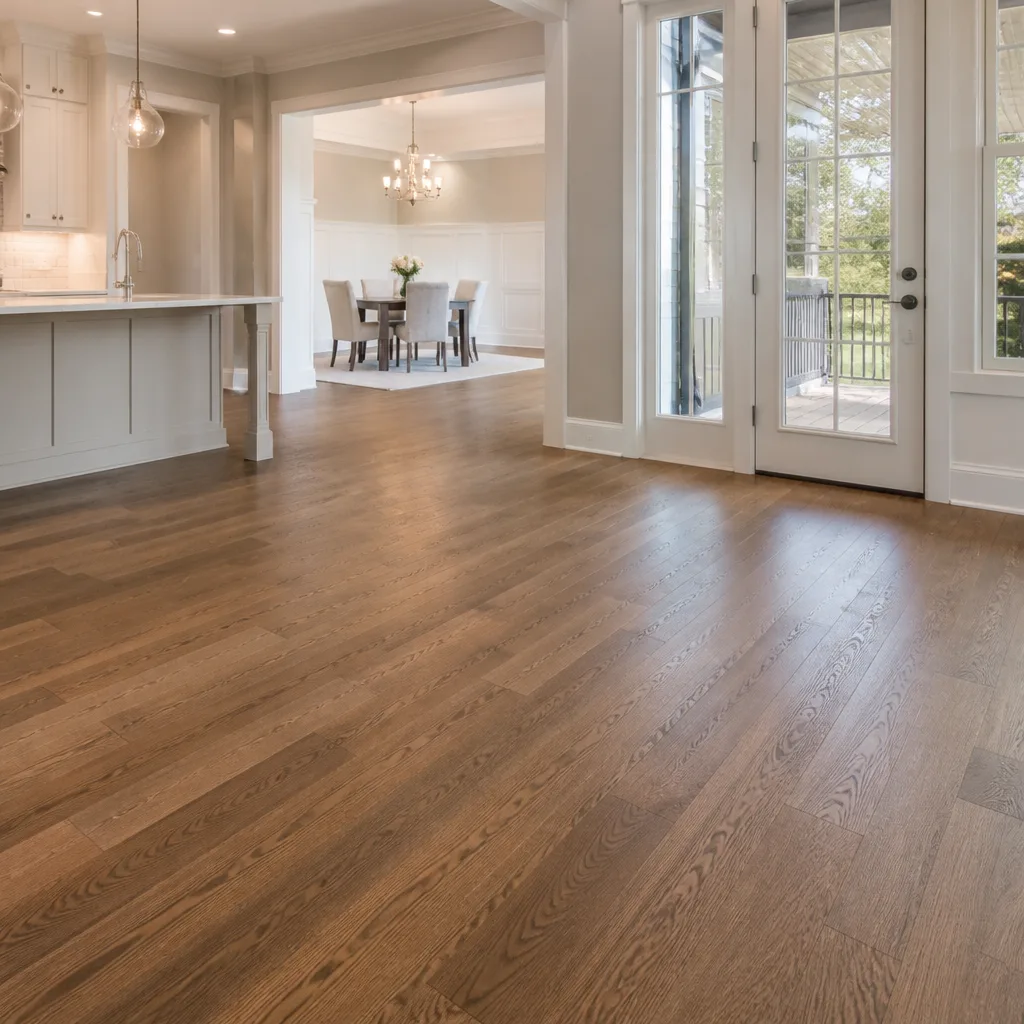 Engineered hardwood
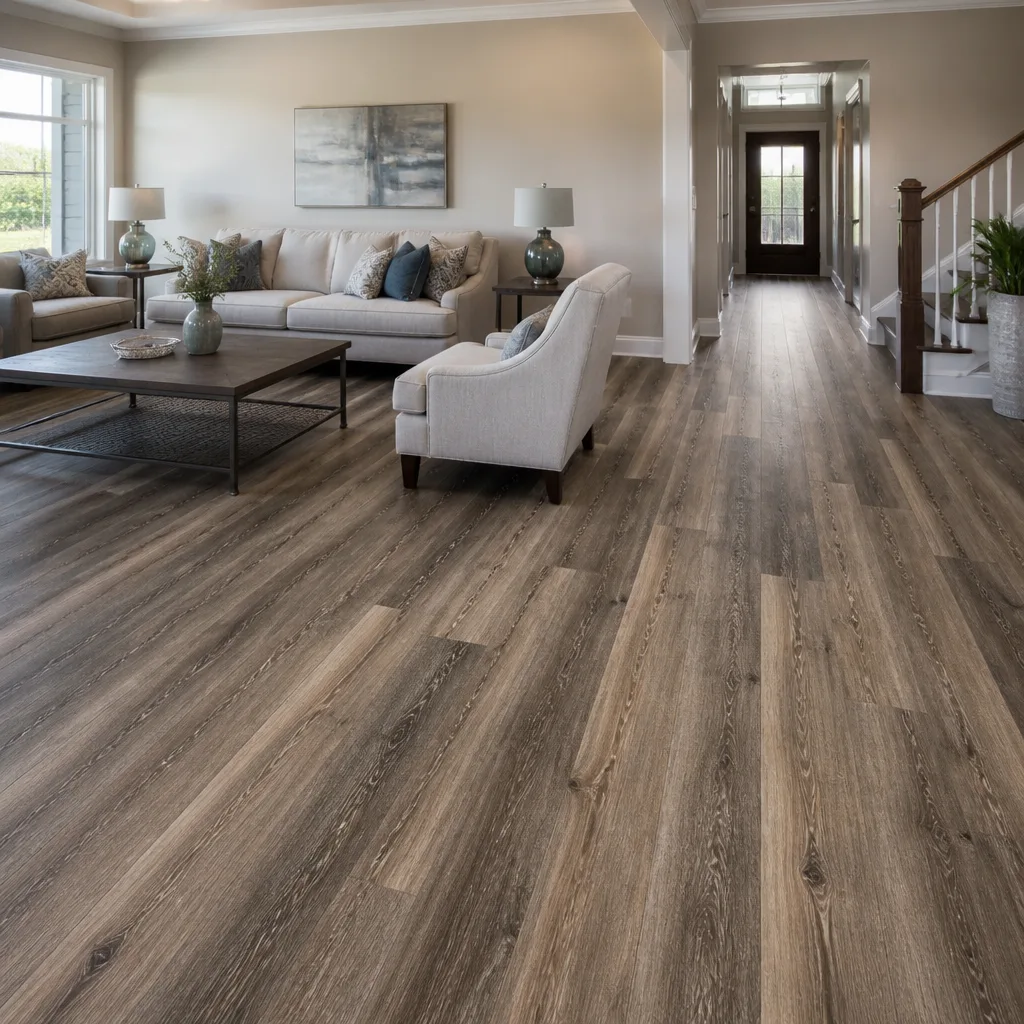 Luxury vinyl plank
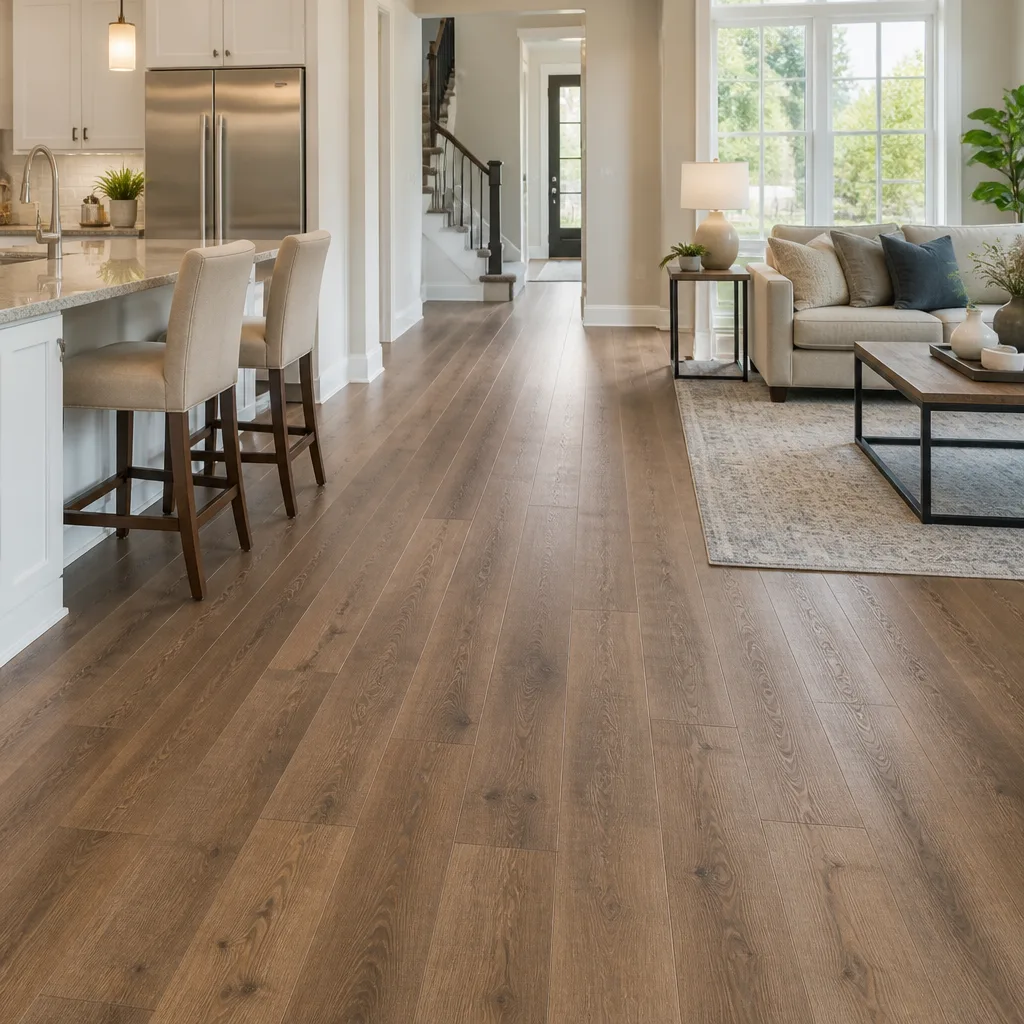 Laminate
 Porcelain tile
 Carpet
 Shaw
 Mohawk
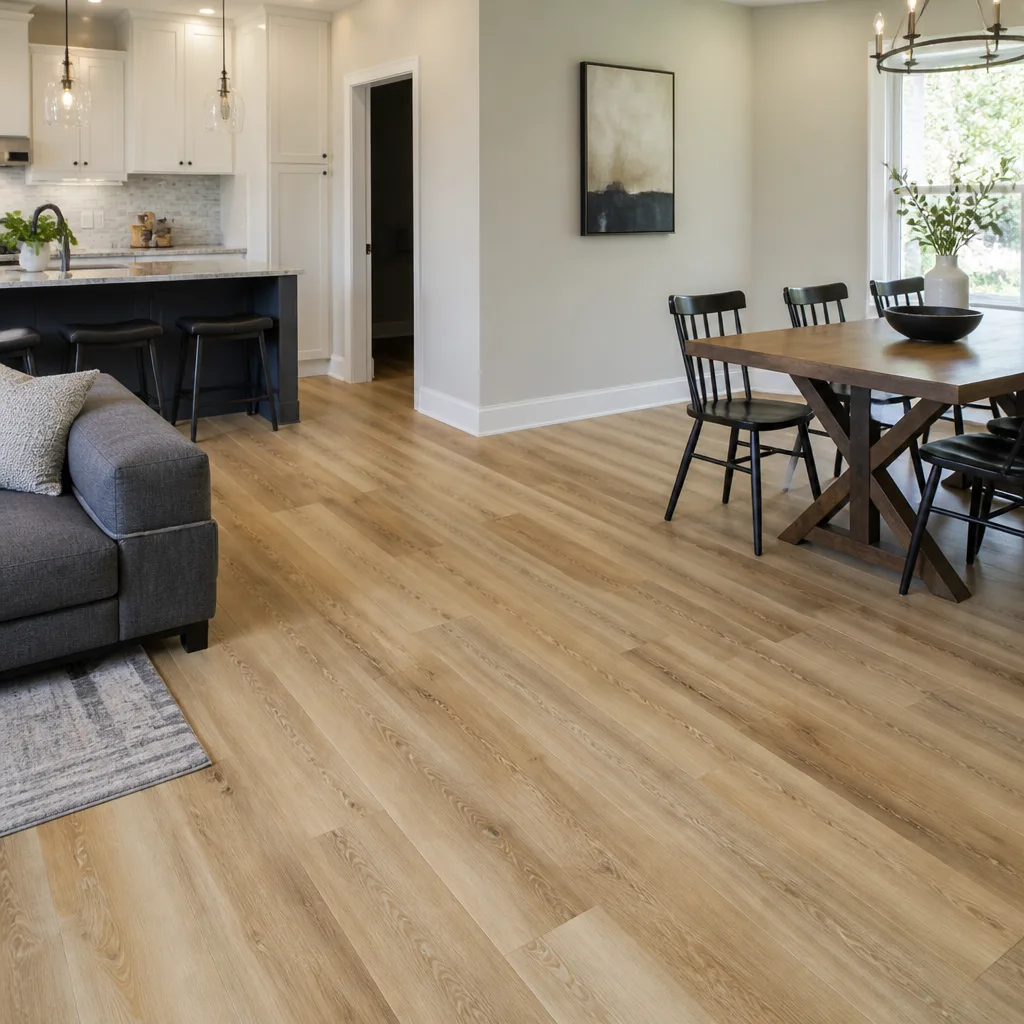 COREtec
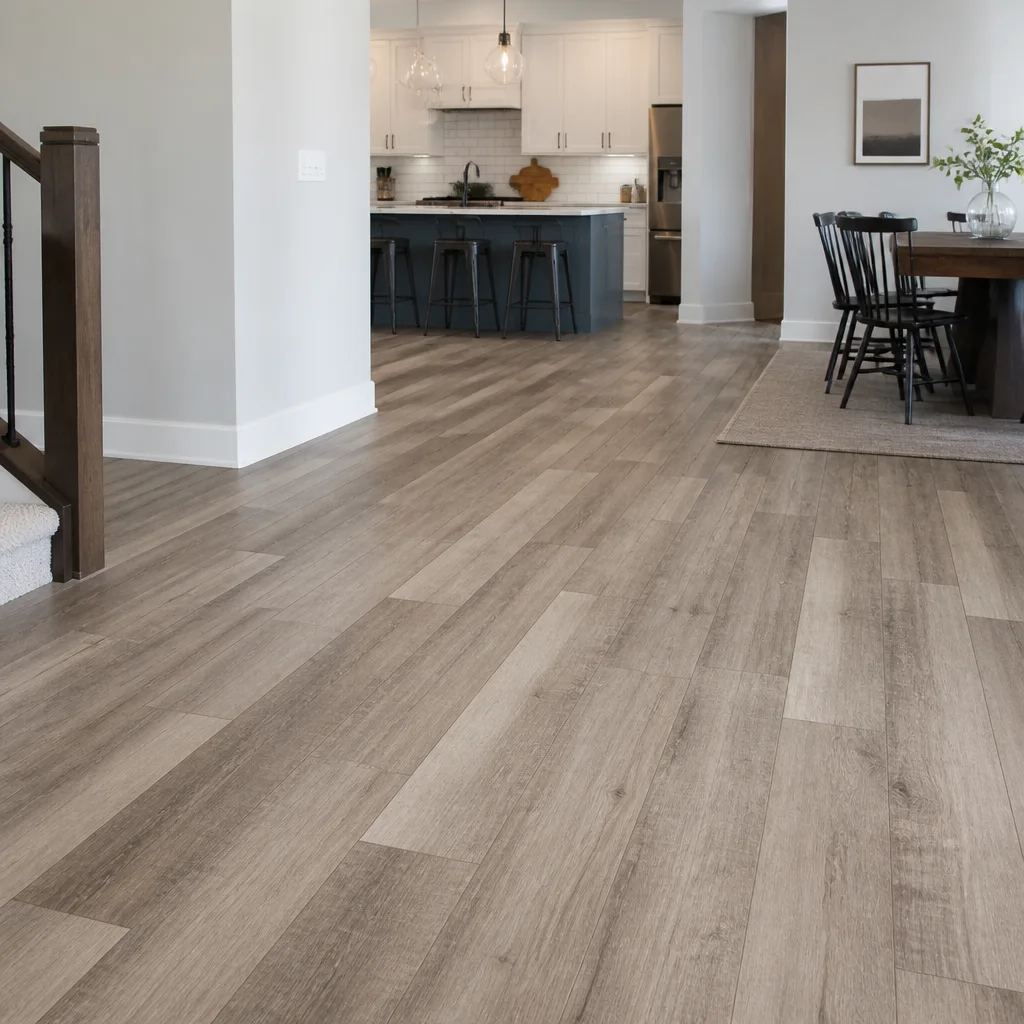 Pergo
Free in-home measure and written estimate: Shaw, Mohawk, COREtec and Pergo lines compared on your own rooms, with carpet, tile, vinyl plank, laminate and hardwood laid out side by side
Get your free estimateThe Complete Guide to Flooring in Spring Valley
Las Vegas Valley soil expands and contracts more than almost anywhere in the continental U.S. The clay beneath Spring Valley swells when it takes on water and shrinks hard when it dries, and that movement works its way up through the slab into whatever is glued or floated on top. Most flooring guides you’ll read were written for climates that have nothing to do with yours. They assume a stable subfloor, moderate humidity, and a house that sits on a crawlspace. Spring Valley homes are slab-on-grade, inland desert, and dry enough that indoor humidity can sit below 20% for months. This guide starts with what the desert actually allows, then moves to what you want. You’ll learn how heat and dry air treat each floor type, why slab construction changes the installation, and how to sequence a multi-room project without wasting material or money.
Quick Answer
In Spring Valley, the floors that hold up best long-term are water-resistant luxury vinyl from LifeProof, Mannington, or Armstrong, porcelain tile from Daltile, and engineered hardwood installed over a properly moisture-tested slab. Solid hardwood and laminate are the hardest to keep stable on Spring Valley’s expansive clay soil and in sub-20% indoor humidity. The right choice depends on the room, the slab, and how your household actually lives.
Styles & brands we work with
- Hardwood
- Engineered hardwood
- Luxury vinyl plank
- Laminate
- Porcelain tile
- Carpet
- Shaw
- Mohawk
- COREtec
- Pergo
Table of Contents
- How does Spring Valley’s desert climate affect flooring?
- Why slab-on-grade construction changes everything
- Which floor types perform best in Clark County?
- How to sequence a multi-room flooring project
- Managing indoor humidity and gap season
- Spring Valley permits, HOA rules, and what to check first
- Hardwood refinishing: restore before you replace
- What flooring installation costs in Spring Valley
How does Spring Valley’s desert climate affect flooring?
Spring Valley’s climate attacks floors in two directions: heat from above and dryness everywhere. Summer attic temperatures can push the underside of an upstairs floor past 130°F, and indoor relative humidity can drop below 20% for weeks at a stretch. Wood shrinks when it dries, which is why so many hardwood floors in the valley develop visible gaps between boards by late summer. Those gaps are not a defect. They’re the wood responding to the air, and they tend to close again when winter humidity rises.
The heat side matters just as much. Materials expand in direct sun, and a west-facing room with a big unshaded window gets far hotter at floor level than a north-facing one. That’s why plank flooring in a sun-exposed room needs room to move at the walls, and why tile grout in an unconditioned space can crack if it wasn’t mixed and installed for the conditions.
Here’s how the main categories handle the desert:
- Luxury vinyl (LifeProof, COREtec, Karndean, Mannington): the steadiest performers. They handle dryness and heat cycling well, and their water resistance makes them the safe pick for kitchens, baths, and laundry rooms.
- Porcelain and ceramic tile (Daltile): unaffected by humidity and heat. The floor itself won’t move; the slab underneath can, so the setting materials and movement joints have to be right.
- Engineered hardwood (Shaw, Mohawk, Armstrong, Mannington): more dimensionally stable than solid, because the layered core resists the swell-and-shrink cycle. Still a wood floor, still affected by dry air.
- Carpet (Shaw, Mohawk, Mannington): comfortable and quiet, but low humidity makes static worse and dry air can make some backing materials brittle over many years. A humidifier in winter helps the whole house, not just the carpet.
- Laminate (Pergo): works, but it’s less forgiving of a slab that isn’t flat and of humidity swings than the vinyl options.
None of this is a reason to avoid a floor type you love. It’s a reason to plan for the climate during installation, not after the first winter.
Why slab-on-grade construction changes everything
Almost every home in Spring Valley sits directly on a concrete slab. There’s no crawlspace and no basement, which means there’s no air gap between your floor and the ground. Three things follow from that.
First, moisture comes from below. Concrete wicks moisture from the soil, and the expansive clay in this valley holds water when it gets it. A slab that reads dry on the surface can still pass moisture vapor up into a wood or laminate floor. Every solid and engineered wood installation, and most laminate installations, needs a moisture test on the slab before anything goes down. If the reading is too high, the fix is a vapor barrier or a moisture-mitigating underlayment, not a thicker pad.
Second, flatness matters more than you’d think. Slabs pour flat in theory and rarely in practice. A dip of a fraction of an inch over a few feet will telegraph through luxury vinyl, make laminate click joints separate, and cause hollow spots under tile. Checking flatness and correcting low areas before installation is standard practice, and skipping it is one of the most common causes of callbacks.
Third, the slab is cold in winter and holds heat in summer. Tile over slab feels cold underfoot in January. Carpet and vinyl with a cushion backing feel warmer. That’s a comfort decision, not a technical one, but it’s real. If you’re replacing carpet in a bedroom with hard flooring, think about the underlayment as part of the comfort package.
Engineered wood rather than solid is the usual answer for slab-on-grade, and glue-down or floating installation depending on the product. The product instructions and the written estimate set the exact method. What matters is that someone actually checks the slab before quoting.
Which floor types perform best in Clark County?
Ranking floors for Clark County conditions comes down to how each one handles dry air, heat, slab moisture, and traffic. Here’s how the nine product categories we work with sort out for a Spring Valley home.
Best all-around: luxury vinyl plank and tile
LifeProof and COREtec are the two water-resistant lines we get asked about most for active households, and for good reason. They stand up to dry air, they don’t care about a splash in the kitchen, and they’re comfortable underfoot. Karndean brings a design-forward premium vinyl look that many generalist shops don’t carry, so if you want a floor that looks like it belongs in a magazine, it’s worth seeing. Spring Valley Floors works across all of these, so you can compare them side by side instead of driving between stores.
Most durable: porcelain tile
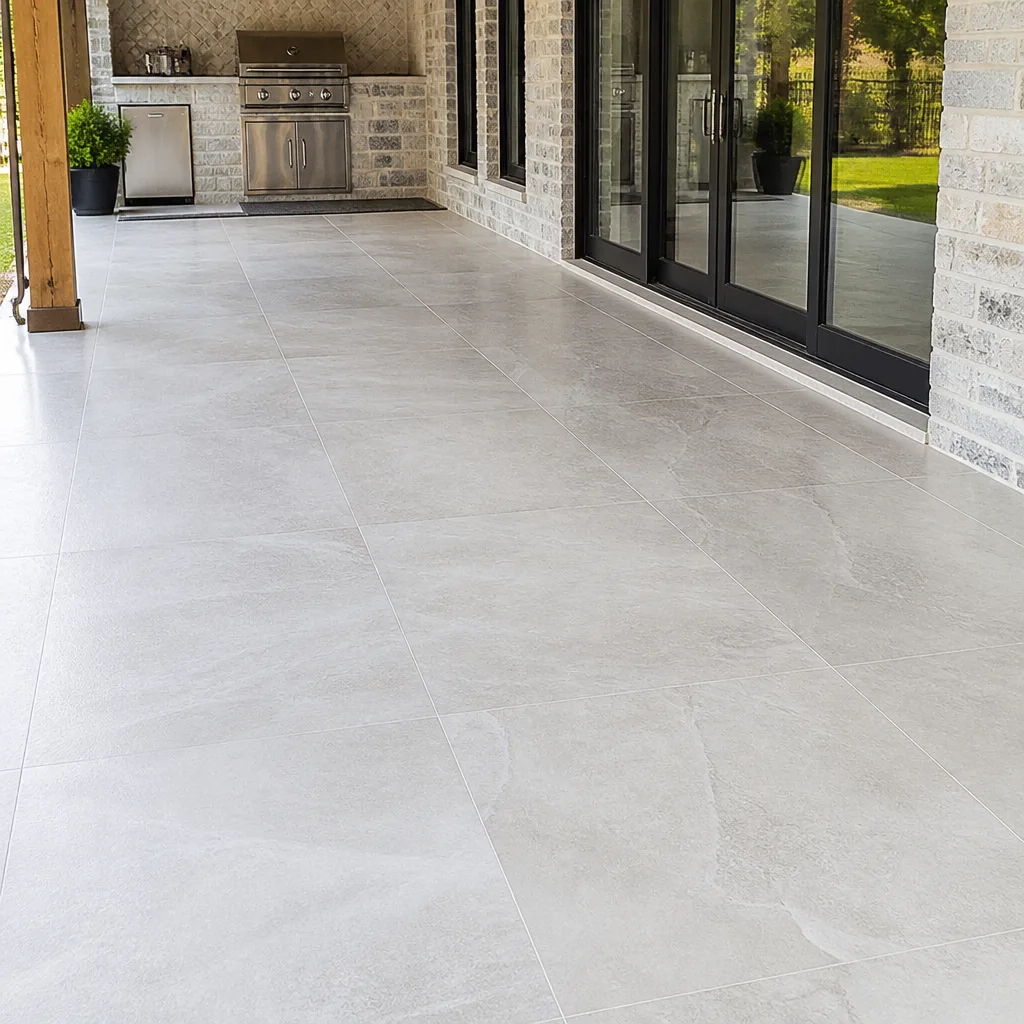
For entryways, baths, laundry rooms, and any room where water might sit, Daltile porcelain tile is the most forgiving choice in this climate. Heat doesn’t faze it, humidity doesn’t touch it, and it will outlast almost everything else in the house. The trade-offs are cold underfoot, a harder feel, and grout lines that need occasional attention. Professional-grade tile sourcing matters here, and Daltile is a supplier we trust for that.
Warmest: carpet
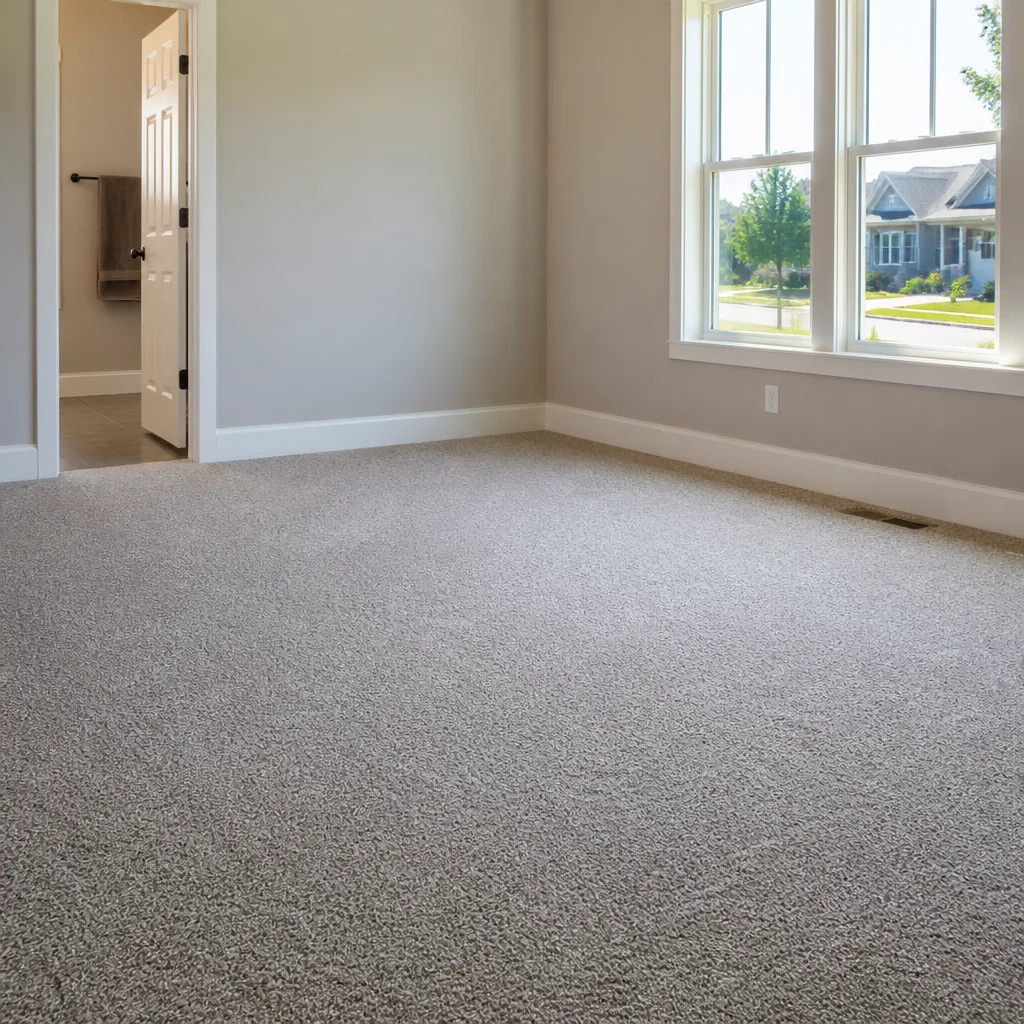
Carpet in bedrooms and closets is still the standard in Spring Valley, and it makes sense: it’s warm, quiet, and forgiving underfoot. Shaw and Mohawk both bring broad options in fiber and style. In low humidity, static can be an issue, and a whole-house humidifier in winter solves more than the carpet.
Most character: hardwood
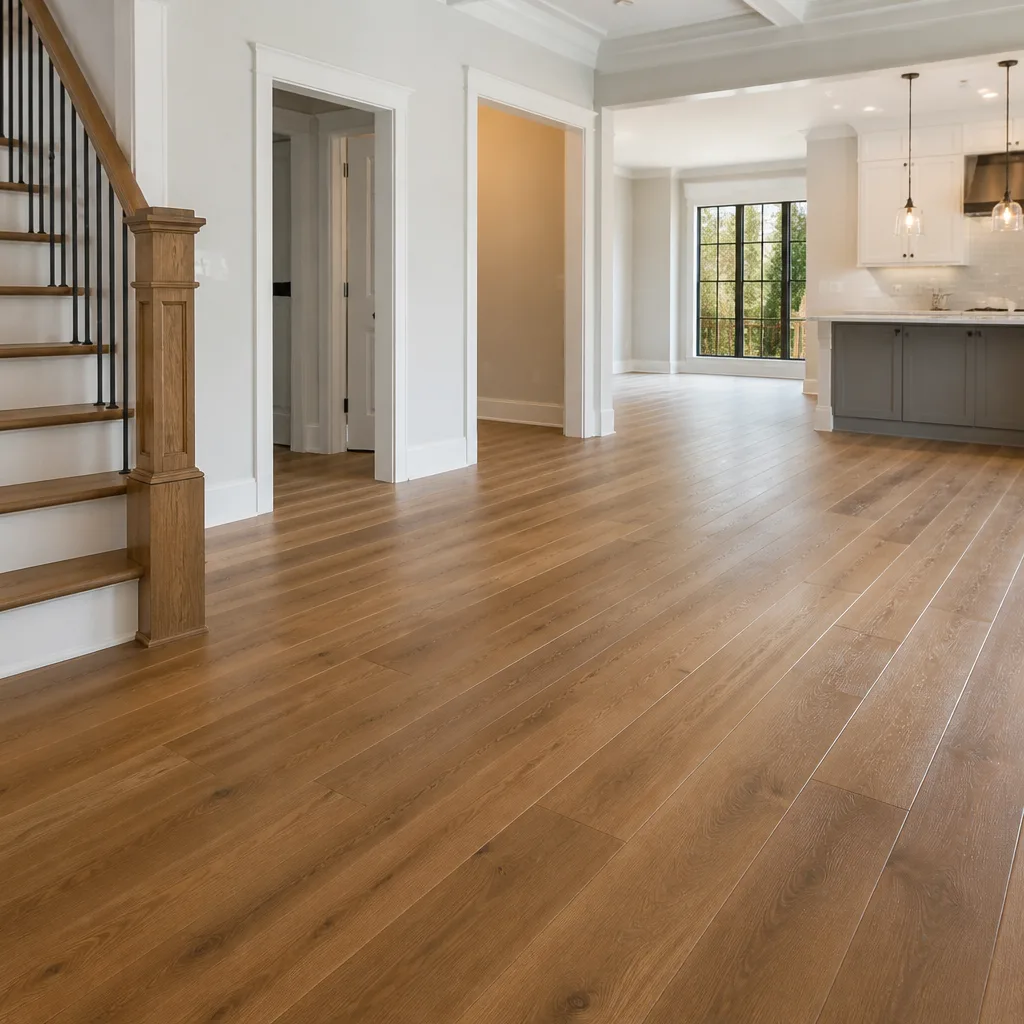
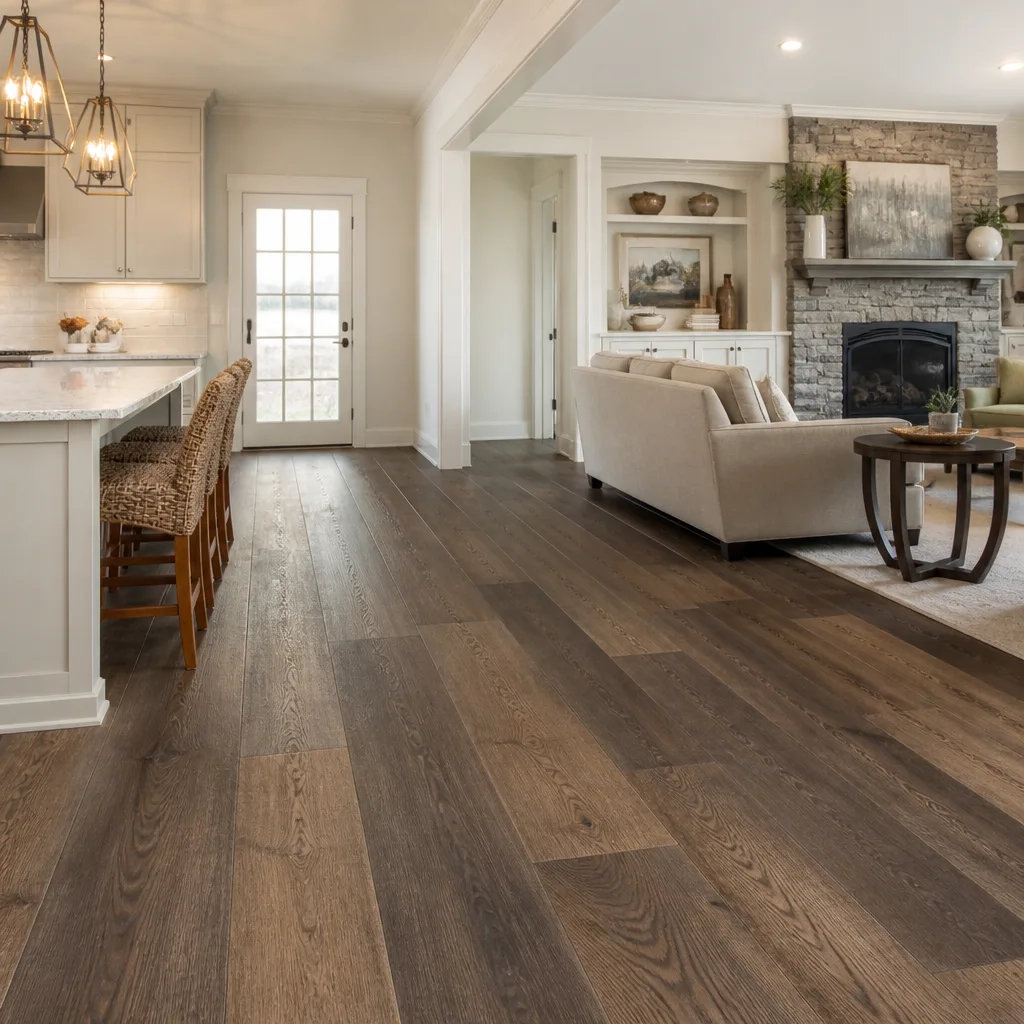
Engineered hardwood from Shaw, Mohawk, Armstrong, or Mannington gives you real wood with better stability in dry air than solid. Solid hardwood can work, but it needs careful acclimation and a slab moisture reading that clears. Both are checked at the estimate visit.
Most budget-flexible: laminate
Pergo laminate offers a lot of look for the money and handles dry air reasonably well. It’s less tolerant of slab moisture and unevenness than vinyl, so it works best in rooms where the slab has been verified. It’s not the floor for a bathroom or a laundry room.
If this list is overwhelming, that’s normal. Our approach is to help you narrow it by room and lifestyle first, then look at products within that category.
How to sequence a multi-room flooring project
Replacing several surfaces at once is a logistics problem as much as a product problem. The order matters, because some decisions lock in others, and moving furniture twice is expensive in time even if the flooring quote doesn’t change.
- Start with the room where function matters most. Baths, kitchens, and laundry rooms drive the product choice, because water resistance rules out some options there. Decide those first.
- Decide whether you want one floor throughout or a transition between rooms. A continuous floor feels larger and modern; a transition lets you use carpet in bedrooms and tile in baths without an awkward line. Both work. Pick the one that matches how you live.
- Group rooms by product, not by location. If three bedrooms are getting the same carpet, install them together. Buying one product in one purchase keeps material consistent between dye lots and simplifies scheduling.
- Do the messy rooms first and the high-traffic rooms last. Tile and refinishing create dust, adhesive odors, and cure time. Get those finished before the bedrooms so you have a comfortable place to retreat to while work is happening.
- Plan furniture moves before the schedule. Every room being refloored needs to be empty of furniture and belongings. If you’re moving a home office, plan for that too.
- Leave room for a buffer. The install day gets booked at the estimate. If rooms are done in phases, leave a reasonable gap between phases so the first one is dried, clean, and ready to use.
If tile work is part of the project, the tile flooring installation work is worth doing first for baths and laundry, since those rooms are typically the tightest on scheduling and cleanup. Carpet and vinyl can follow.
Managing indoor humidity and gap season
The single most common question we get from Spring Valley homeowners in late summer is about gaps in wood floors. Boards that sat tight in spring open up by August, sometimes by an eighth of an inch or more between planks. Then the winter air comes, and some of that closes. This is normal behavior for wood in a desert climate.
You can’t stop the wood from moving, but you can keep it from moving more than it needs to. A few practical steps:
- Keep indoor relative humidity reasonably stable. A whole-house humidifier set to run in winter and spring helps wood floors, cabinets, and even drywall. It also cuts static shock in carpeted rooms.
- Use window coverings on west-facing glass. Direct summer sun heats floors unevenly, and uneven heat means uneven movement.
- Don’t run a swamp cooler on a wood floor. Evaporative coolers push humidity up quickly and unevenly, which is the opposite of what a wood floor wants. If your home has one, talk to us before you pick a wood product.
- Give flooring room at the walls. A proper expansion gap at the perimeter, hidden under baseboard, is what saves the floor when it swells. It’s not optional, and it’s why baseboard sometimes has to come off and go back on.
Luxury vinyl and tile don’t care about dry air the way wood does, which is a big part of why they’re the safest picks in Spring Valley. But if you have your heart set on hardwood, an honest conversation about humidity control and slab moisture comes first.
Permits, HOA rules, and what to check first in Spring Valley
Flooring replacement in a residential home is usually not a permitted project in the Las Vegas Valley, but not always. Structural changes, subfloor repairs that touch the framing, adding a bathroom, or anything that changes the layout of a room can trigger the need for a permit. If a project involves moving plumbing for a new tiled shower or adding a room, check with the city or county building department before work starts. We’ll point out anything that looks like it might cross that line during the estimate.
Homeowners associations are a bigger issue in Spring Valley than most flooring contractors will tell you. Many of the valley’s planned communities have rules about:
- Exterior-visible flooring changes. Tile on a covered patio or changes that are visible from outside can fall under HOA architectural review.
- Noise and working hours. HOAs often restrict when tile cutting, demolition, and other noisy work can happen. That affects scheduling.
- Material restrictions for patios and entryways. Some associations specify what can go on exterior surfaces for uniformity.
The rule is simple: if your home is in an association, read the CC&Rs for architectural review requirements before ordering material. Getting approval first costs nothing and saves a headache later. If your flooring project is entirely interior and doesn’t change anything visible from outside, association review is usually not needed, but it’s worth a quick check with your HOA to confirm.
Hardwood refinishing: restore before you replace
If your home already has hardwood, you may not need a new floor. Hardwood refinishing sands the existing surface, repairs what’s damaged, and applies a new finish. It keeps the original floor, avoids waste, and preserves whatever character the wood has earned. In Spring Valley, where dry air and sun exposure can make an older finish look dull, refinishing is often the smarter spend.
Refinishing works when a few conditions are met:
- The boards are thick enough to take a sand. Very thin solid wood or engineered boards with a shallow wear layer may not survive another sanding. This is checked at the estimate visit.
- The wear layer is intact enough to finish. If the wood fibers are exposed in high-traffic areas, a sand and finish is still possible but may need more repair.
- Stain matching has limits. If you want a specific stain color, we can test it, but we can’t promise an exact match to a sample. Wood species, age, and sun exposure all affect the final color.
Refinishing doesn’t fix a subfloor problem, and it doesn’t move a floor to a different room. What it does is give you a refreshed floor without the tear-out, the new material cost, and the waste of a floor that still has plenty of life in it. If you have older hardwood in a Spring Valley home and you’re not sure whether it’s refinishable, an estimate visit gives a real answer. We’d rather tell you the existing floor can be saved than sell you a replacement you don’t need.
What flooring installation costs in Spring Valley
The honest answer is that we don’t quote flooring by the square foot over the phone, because every Spring Valley home is different. What we can do is give you a written estimate after a free measure and in-home visit. What you’ll pay depends on the product, the square footage, the condition of the slab, and how many rooms are involved.
Here’s how the cost breaks down in general terms, so you know what you’re comparing:
- Material: the largest variable. Carpet, vinyl, tile, and hardwood sit in very different price ranges, and within each category there are economy and premium lines. Seeing a few options in person at the estimate helps you land on the right one.
- Installation labor: depends on the product and the room. Tile involves more labor than carpet. Hardwood refinishing is a different process than new installation and priced as such.
- Removal and disposal: taking out the old floor and hauling it away. Important to have in the quote so there are no surprises.
- Slab prep: moisture testing, flatness correction, and any repair needed before installation. Skipping this step costs more later.
- Trim and transitions: baseboard removal and reinstallation, thresholds, and transition strips between rooms.
What you should insist on from any contractor is a written, itemized estimate that separates material from labor and prep, and a clear statement of what’s included. We give you all of that. The estimate is free, and the written number is what you pay.
For carpet specifically, the carpet installation estimate visit also lets us check the subfloor, discuss pad options, and make sure the product matches your humidity and traffic.
See the difference
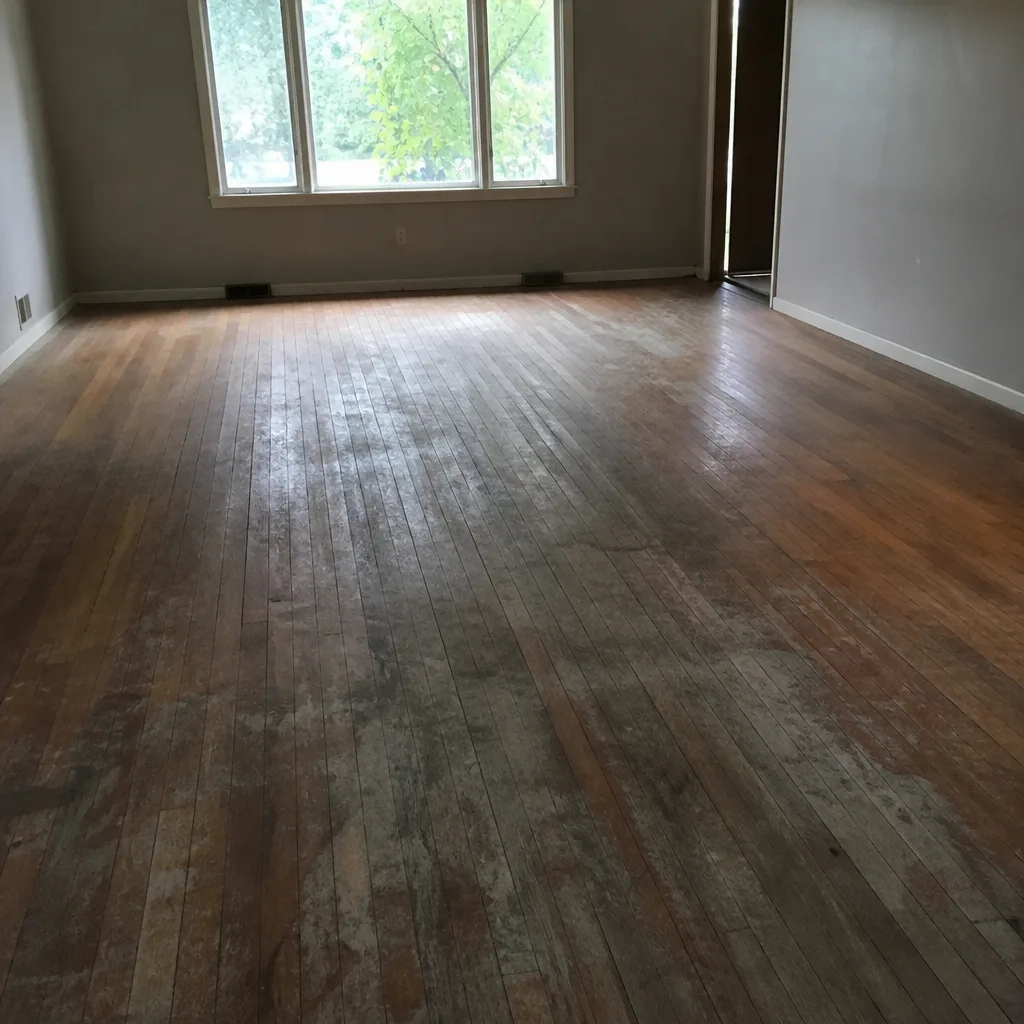 Before
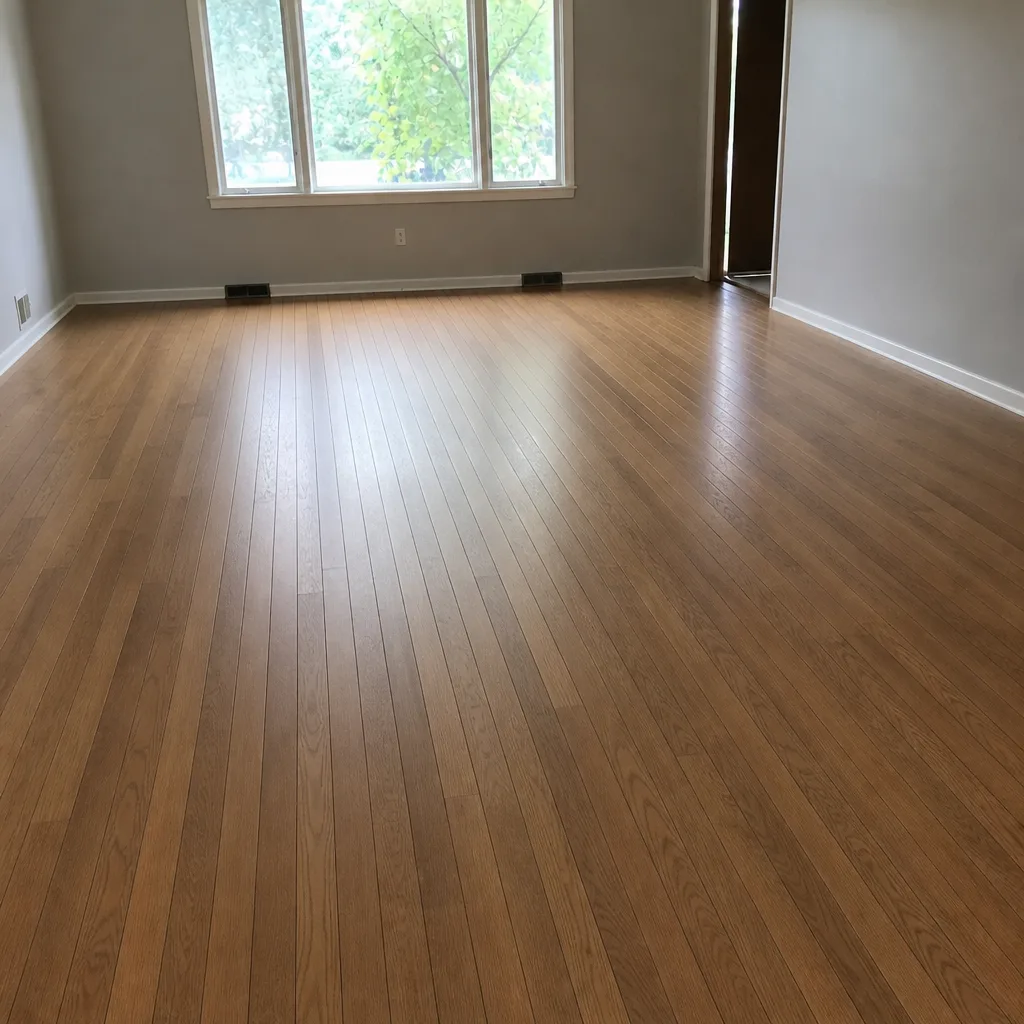 After
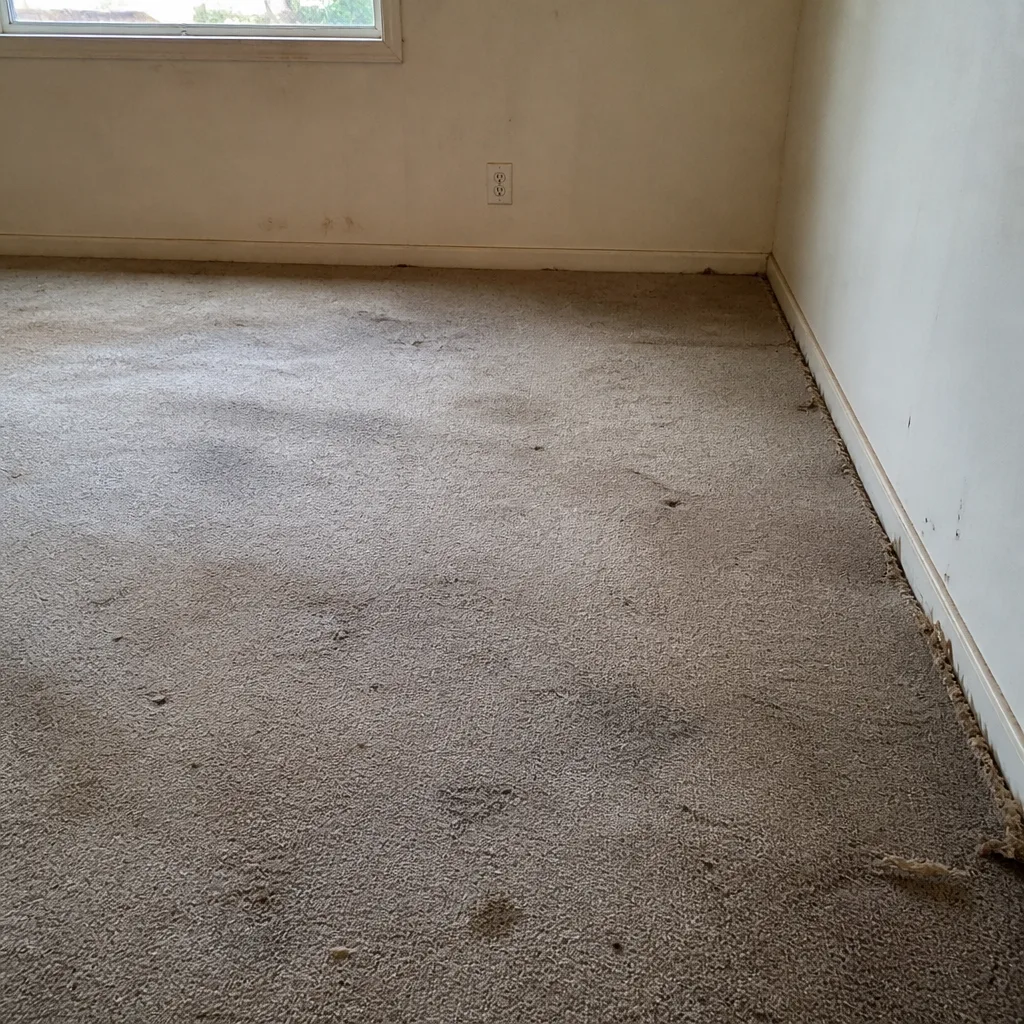 Before
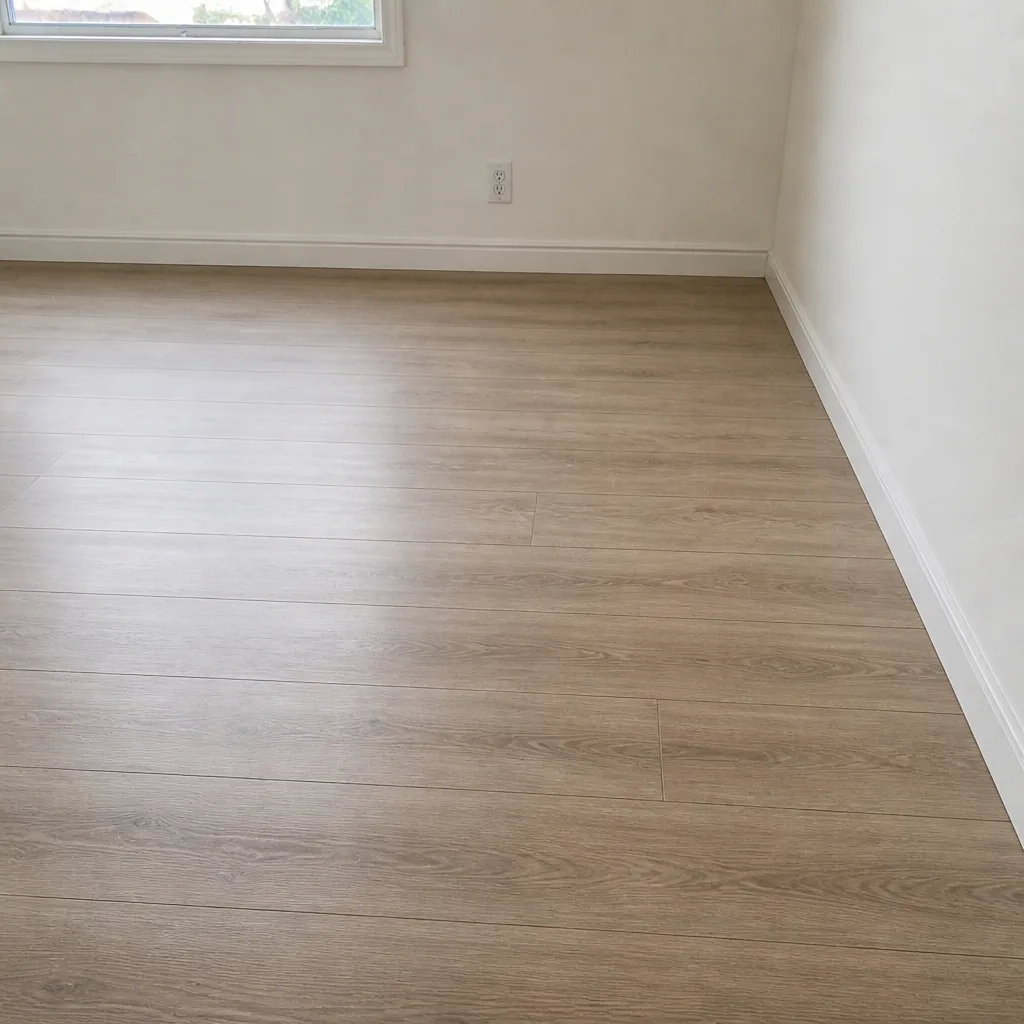 After
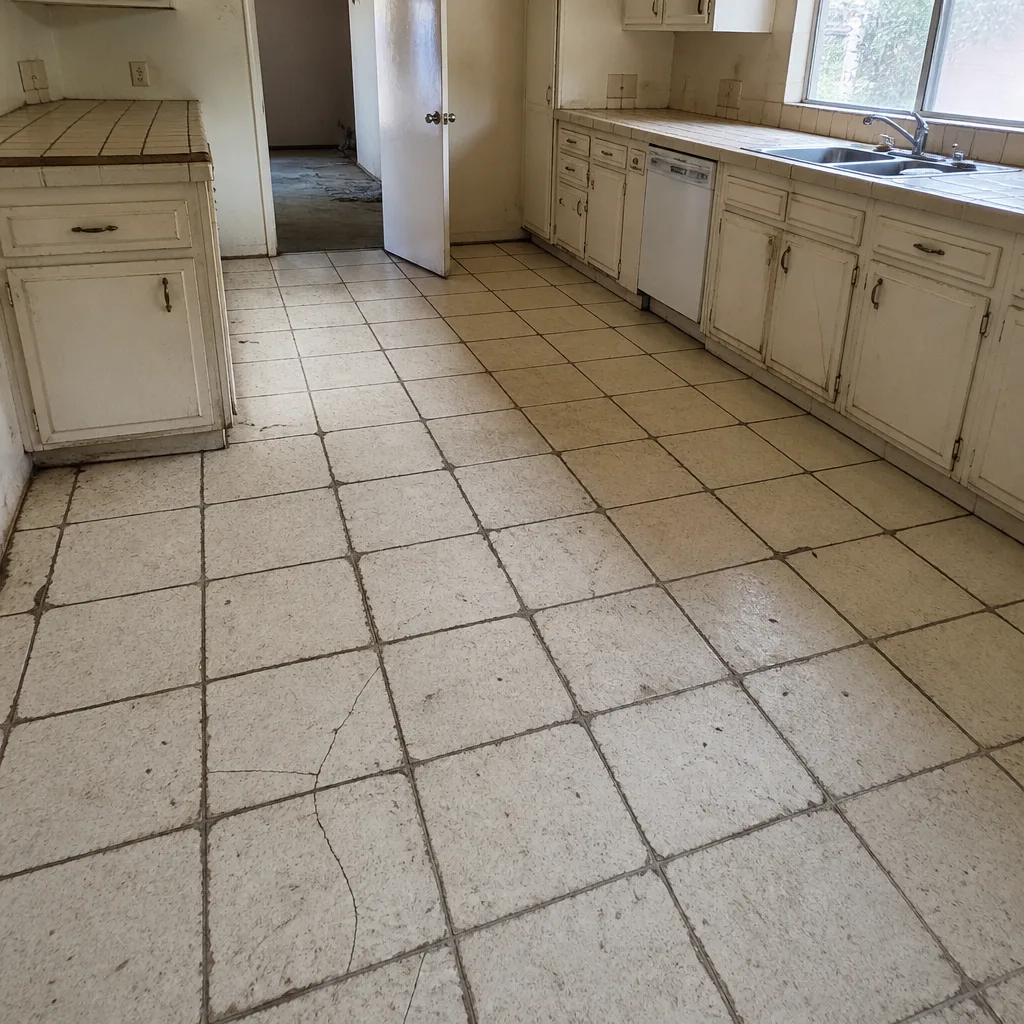 Before
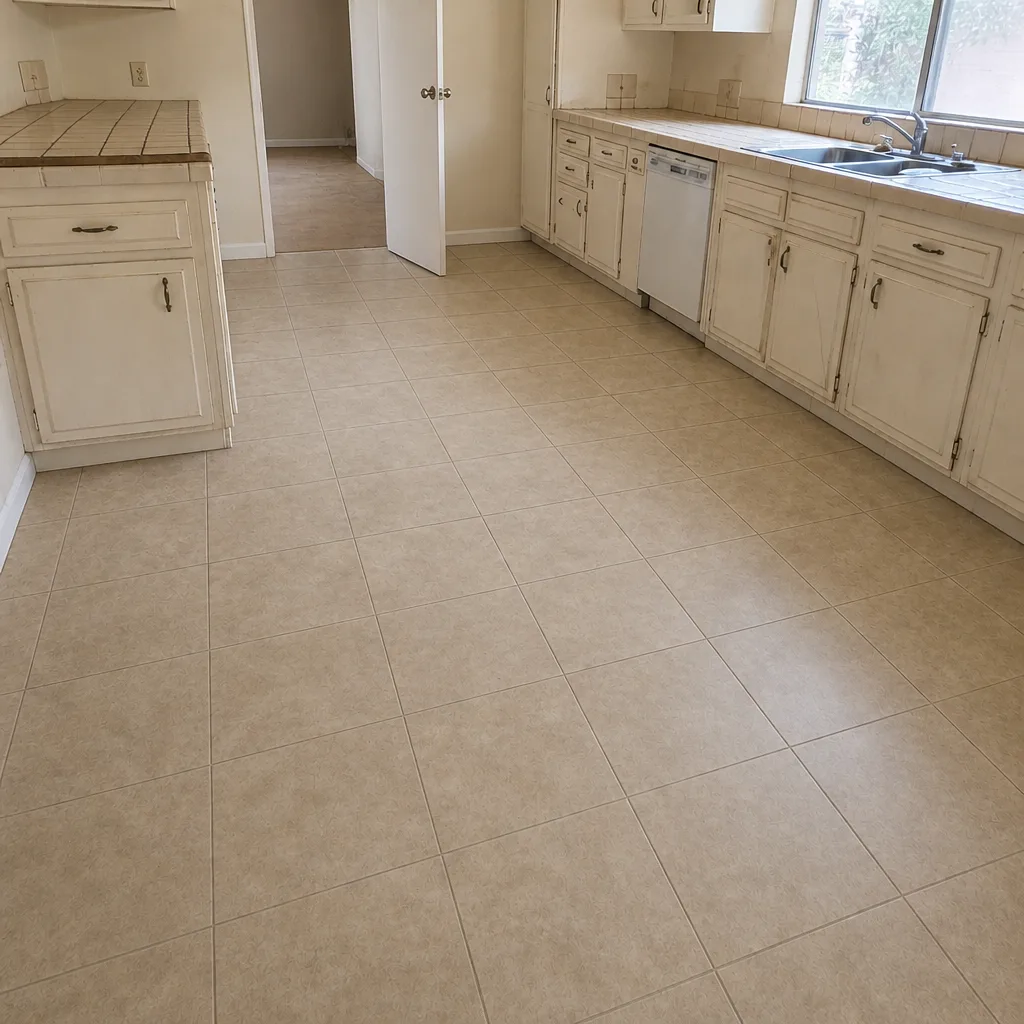 After
Common Mistakes to Avoid
- Skipping the slab moisture test. A slab in Spring Valley can read dry on the surface and still pass moisture up into wood or laminate. Every wood and laminate installation needs the test, and skipping it is the fastest route to a cupped or buckled floor.
- Buying on looks alone. A floor that looks beautiful in the showroom and then sees summer sun in a west-facing room is a different situation. Match the product to the room’s exposure and moisture, not just to the sample.
- Underestimating dry-air movement. Homeowners who install solid wood without humidity control often learn about gap season the hard way. Plan for movement at the perimeter or pick a more stable product.
- Ignoring HOA rules until the material arrives. Architectural review in Spring Valley associations can take time, and no flooring should be ordered until it’s cleared.
- Letting the lowest bid drive the decision. A quote that leaves out slab prep, removal, or trim isn’t a cheaper quote, it’s a partial one. Compare itemized estimates.
- Refinishing a floor that can’t take another sand. Very thin boards have limits. Have the wood checked before committing to refinishing rather than replacing.
- Sequencing rooms out of order. Doing carpet before tile in a renovation timeline means the carpet sees dust and traffic it shouldn’t. Plan the order around the mess.
When to Call a Professional
Some flooring decisions are simple, and some aren’t. Call a professional when the slab is involved and you’re not sure of its condition, when you’re choosing between hardwood and a more stable alternative for a Spring Valley home, when you’re refinishing existing wood and need to know if the boards have enough left to sand, when tile is involved and it needs to be flat and waterproof, or when you’re replacing multiple surfaces and want the schedule to make sense. If a floor has buckled, cupped, or lifted, that’s a moisture or installation problem and it needs eyes on it before anyone talks about replacement. Spring Valley Floors offers free estimates in Spring Valley. Call (833) 734-5027. We answer 24/7. Fast dispatch from 7am to 7pm, Sunday through Friday.
Frequently Asked Questions
Water-resistant luxury vinyl from LifeProof, Mannington, or Armstrong is the best all-around choice for most Spring Valley rooms, because it handles dry heat well and stands up to water. Porcelain tile from Daltile is the most durable for baths and entries, and engineered hardwood is the best option if you want real wood. The final choice depends on the room and how you live in it. Call (833) 734-5027 for a free estimate and a real comparison.
Usually yes for wood and most laminate, because slab-on-grade concrete passes moisture vapor up into the floor. The measurement done at the estimate visit determines whether and what kind of barrier is needed. It is not a step to skip. Call (833) 734-5027 to schedule a free measure.
Yes, if the boards are thick enough to sand and the wear layer is intact. Refinishing saves the material cost of a new floor and preserves the existing wood. The only way to know for sure is to have the boards checked during the estimate. Call (833) 734-5027 for a free refinishing estimate.
The schedule depends on the product and the number of rooms, and it’s set at the estimate. Carpet and vinyl move faster than tile, and refinishing runs on a different timeline than new installation. Your written estimate includes the planned schedule. Call (833) 734-5027 to book your free measure.
Some movement is normal for wood in low-humidity desert air, and gaps often appear in late summer and partial close in winter. Keeping indoor humidity reasonably stable helps minimize it. If your gaps are severe or accompanied by cupping, that’s a sign of a moisture problem worth checking. Call (833) 734-5027 for a free assessment and estimate.
Interior flooring changes usually don’t need HOA architectural review, but anything visible from outside, patio tile, and noisy work schedules may fall under association rules. Check your CC&Rs before ordering material. Call (833) 734-5027 if you want to talk the project through before you commit.
The Bottom Line
The desert writes the first draft of any flooring decision in Spring Valley. Slab-on-grade construction means moisture comes from below, dry air means wood moves, and heat means sun-facing rooms need to be planned for. Start with what the climate allows, then pick the floor that fits how you live. That points most Spring Valley homeowners toward water-resistant luxury vinyl or porcelain tile, with engineered hardwood for wood lovers and refinishing as a smart alternative for an existing floor that still has years left. Get the slab tested, get a written itemized estimate, and check your HOA before you buy. Spring Valley Floors offers free estimates in Spring Valley. Call (833) 734-5027. We answer 24/7. Fast dispatch from 7am to 7pm, Sunday through Friday.
Written by the team at Spring Valley Floors.