
Last updated November 18, 2026
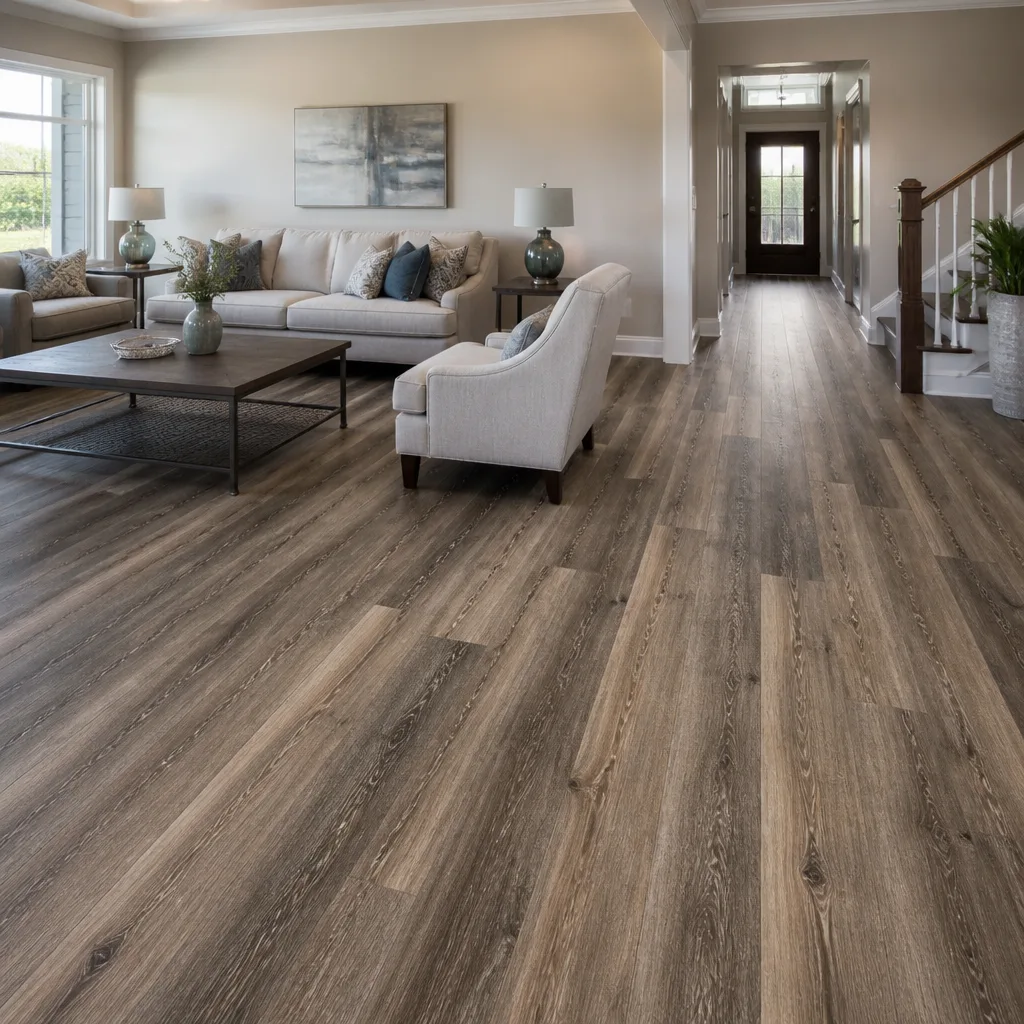 Luxury vinyl plank
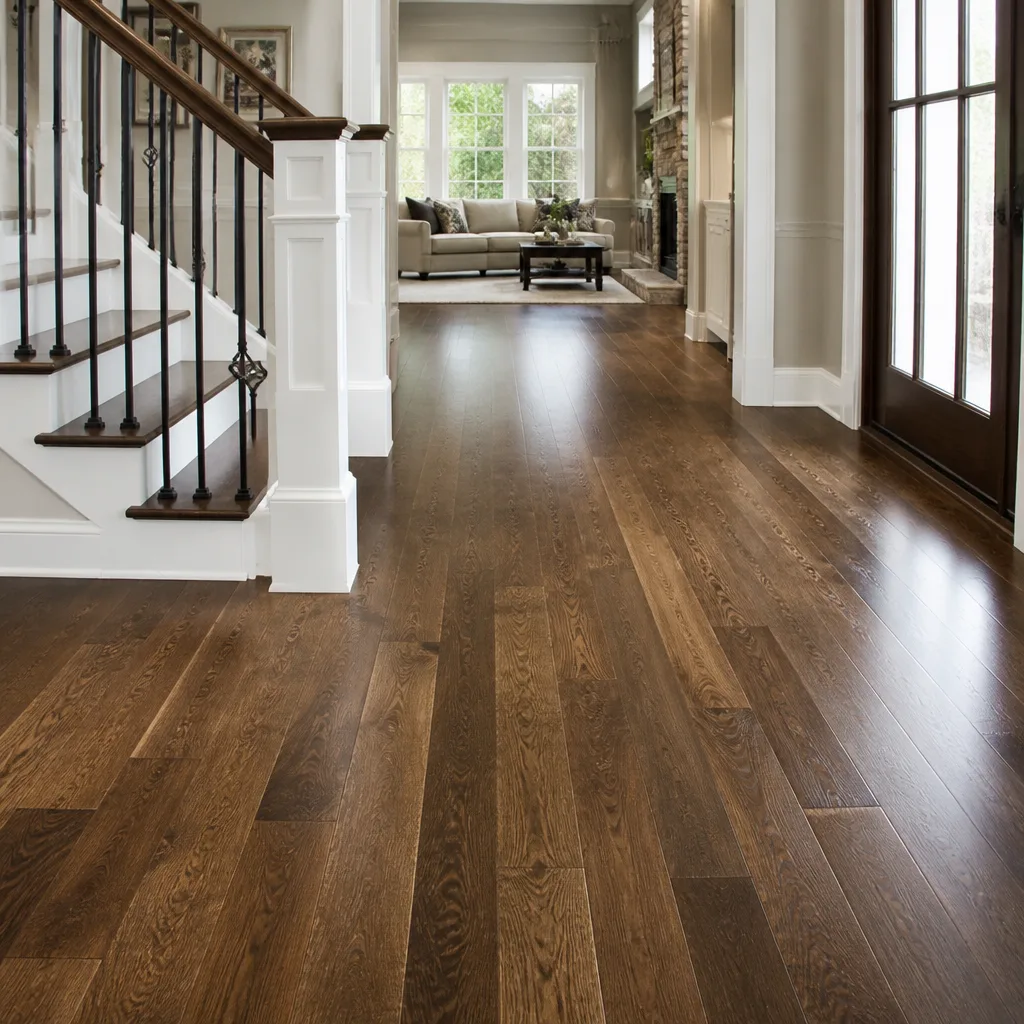 Hardwood
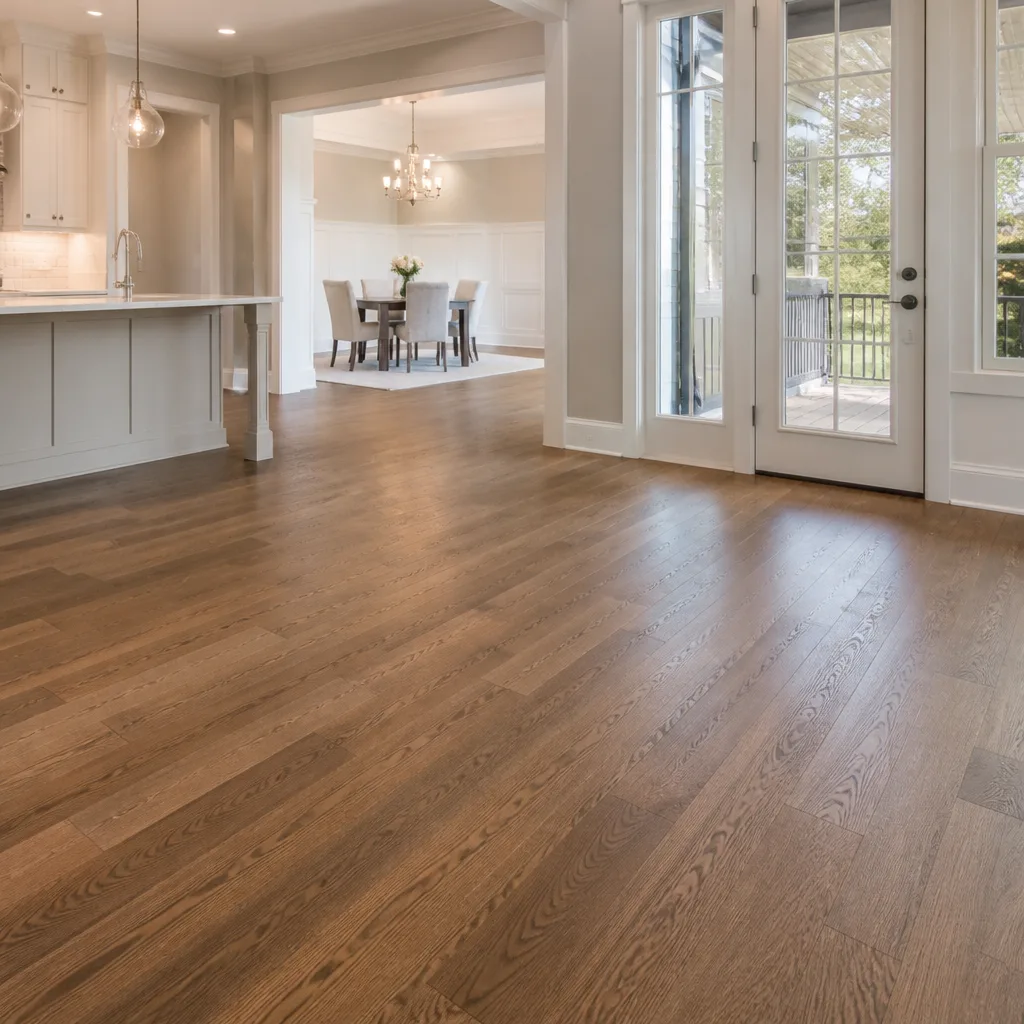 Engineered hardwood
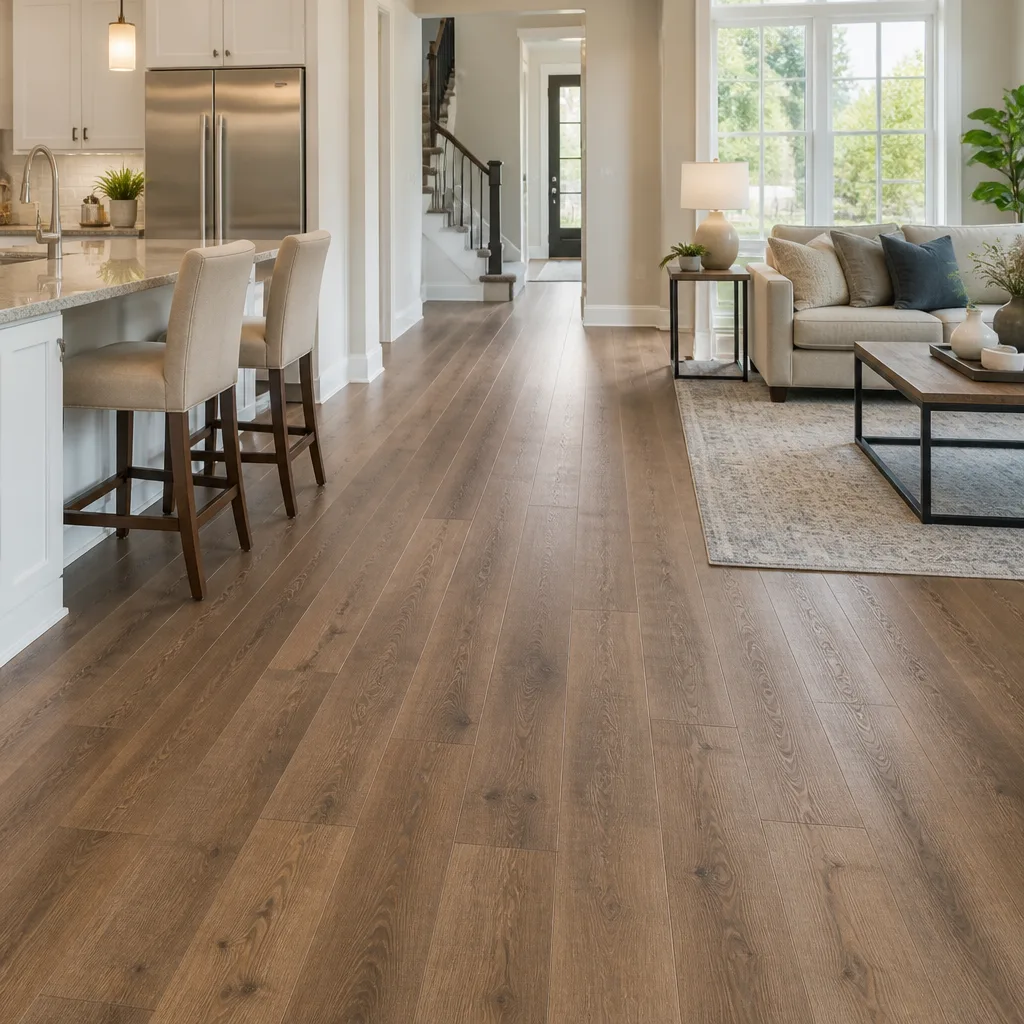 Laminate
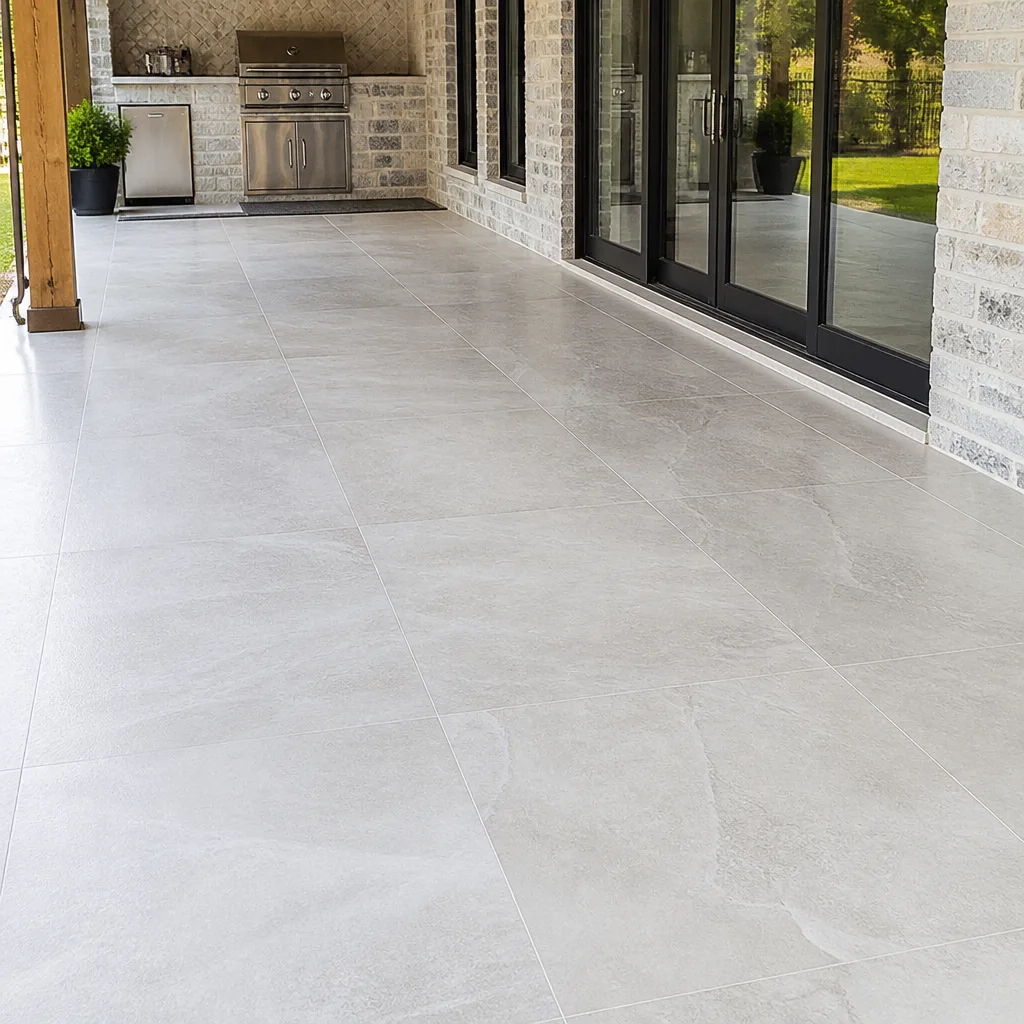 Porcelain tile
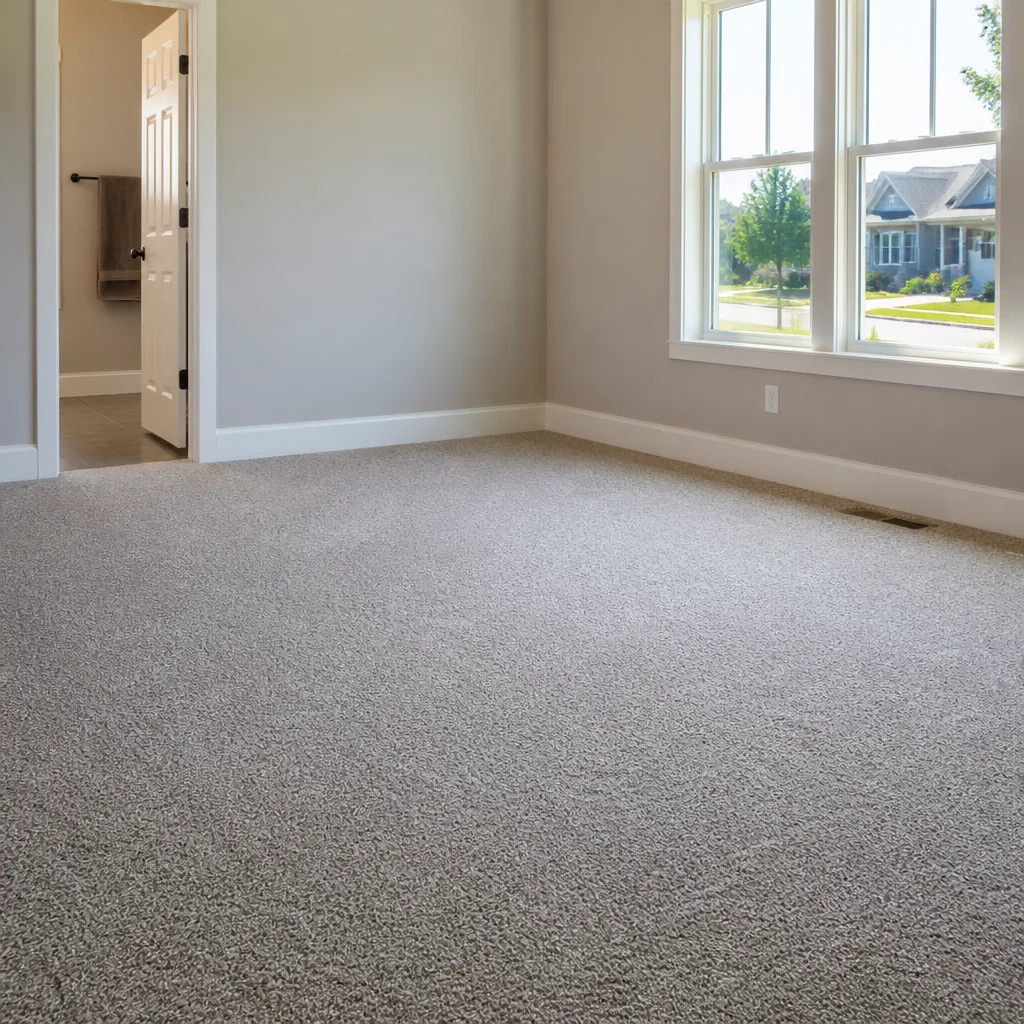 Carpet
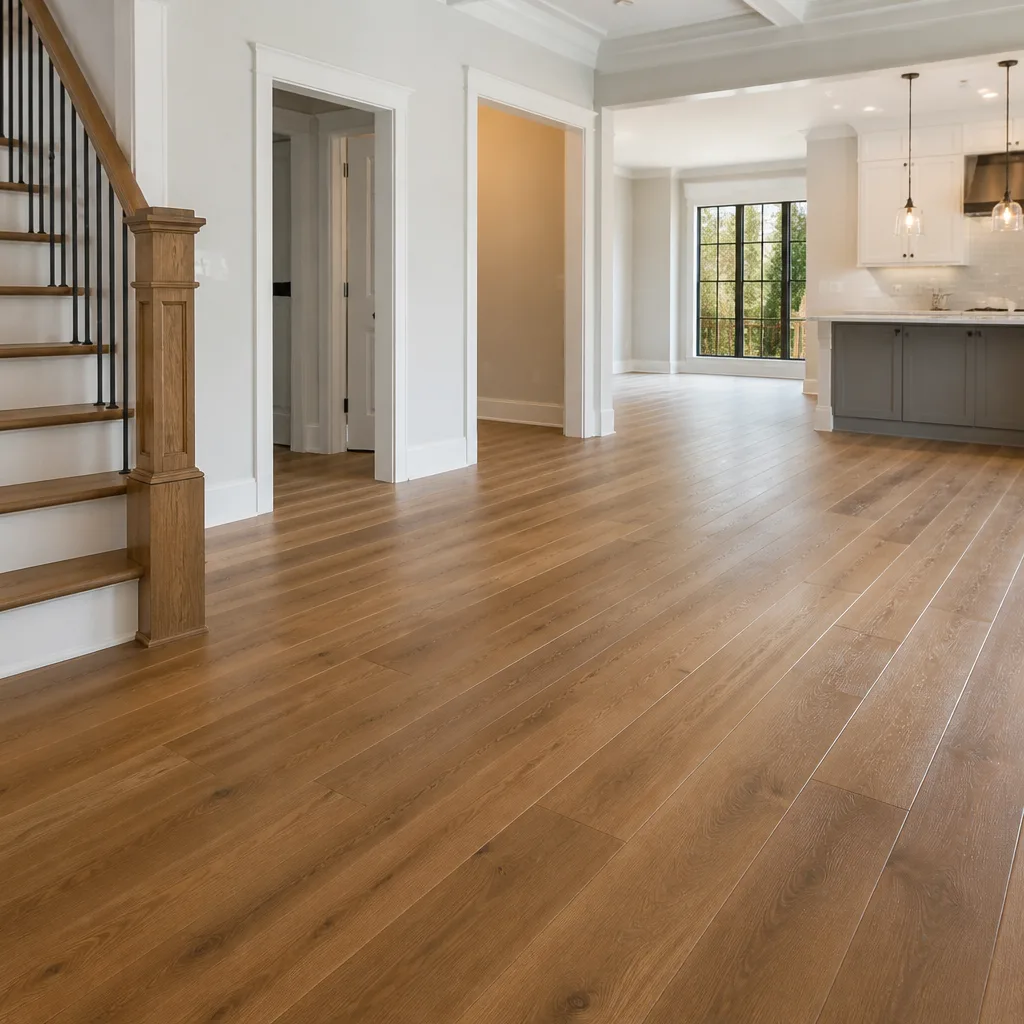 Shaw
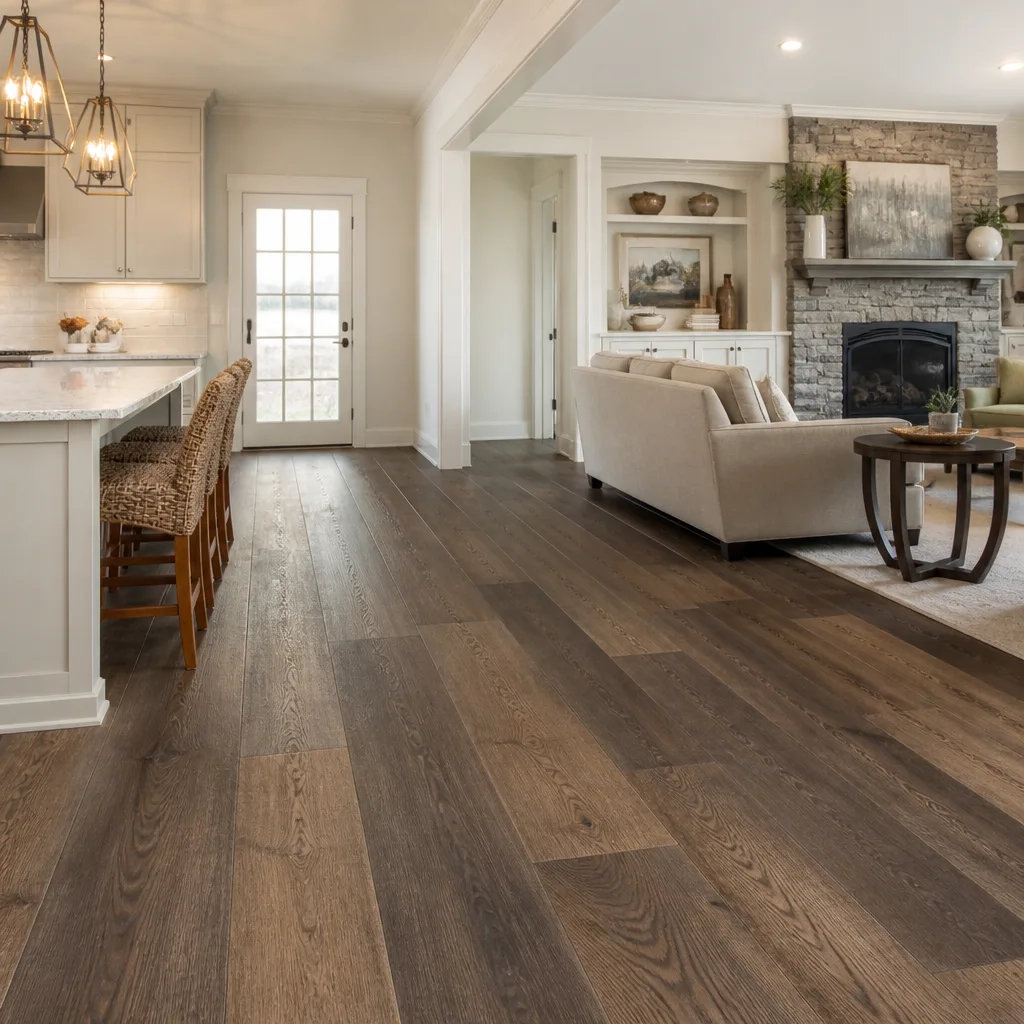 Mohawk
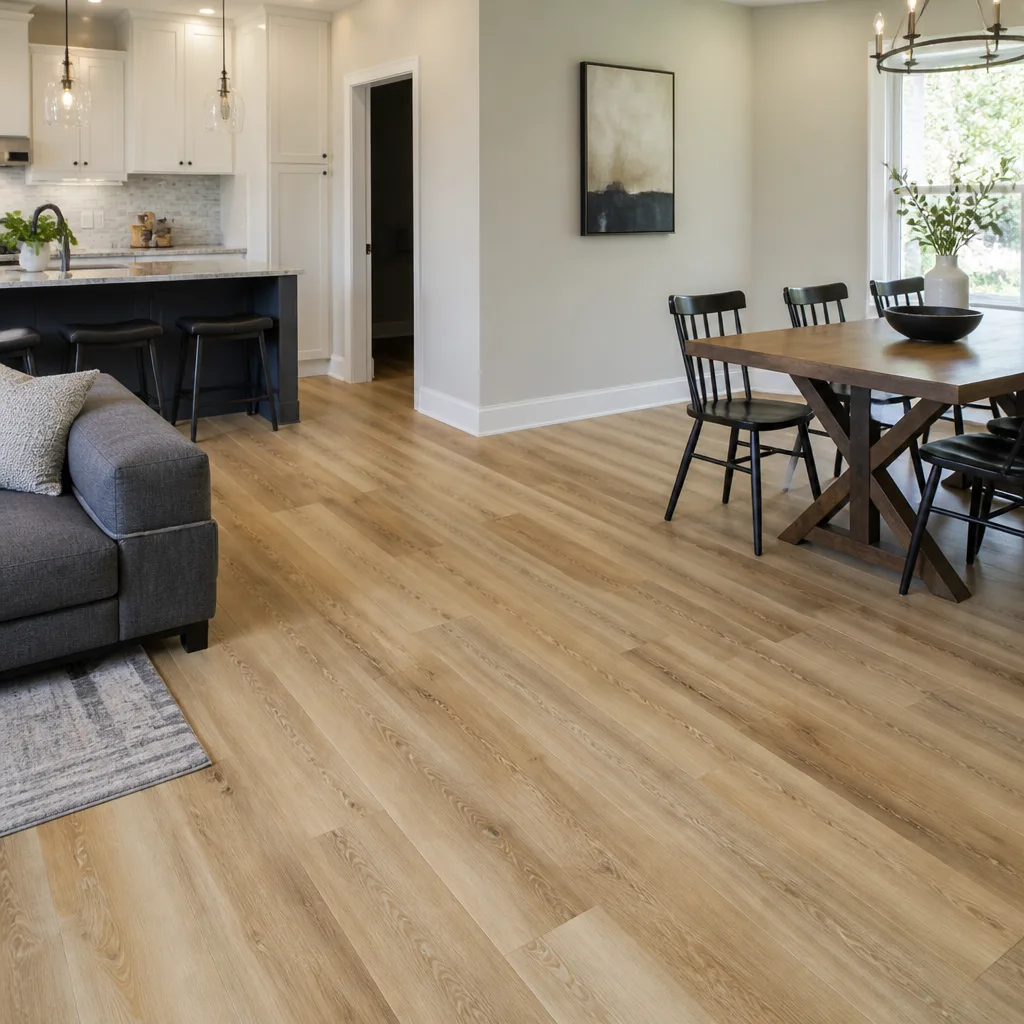 COREtec
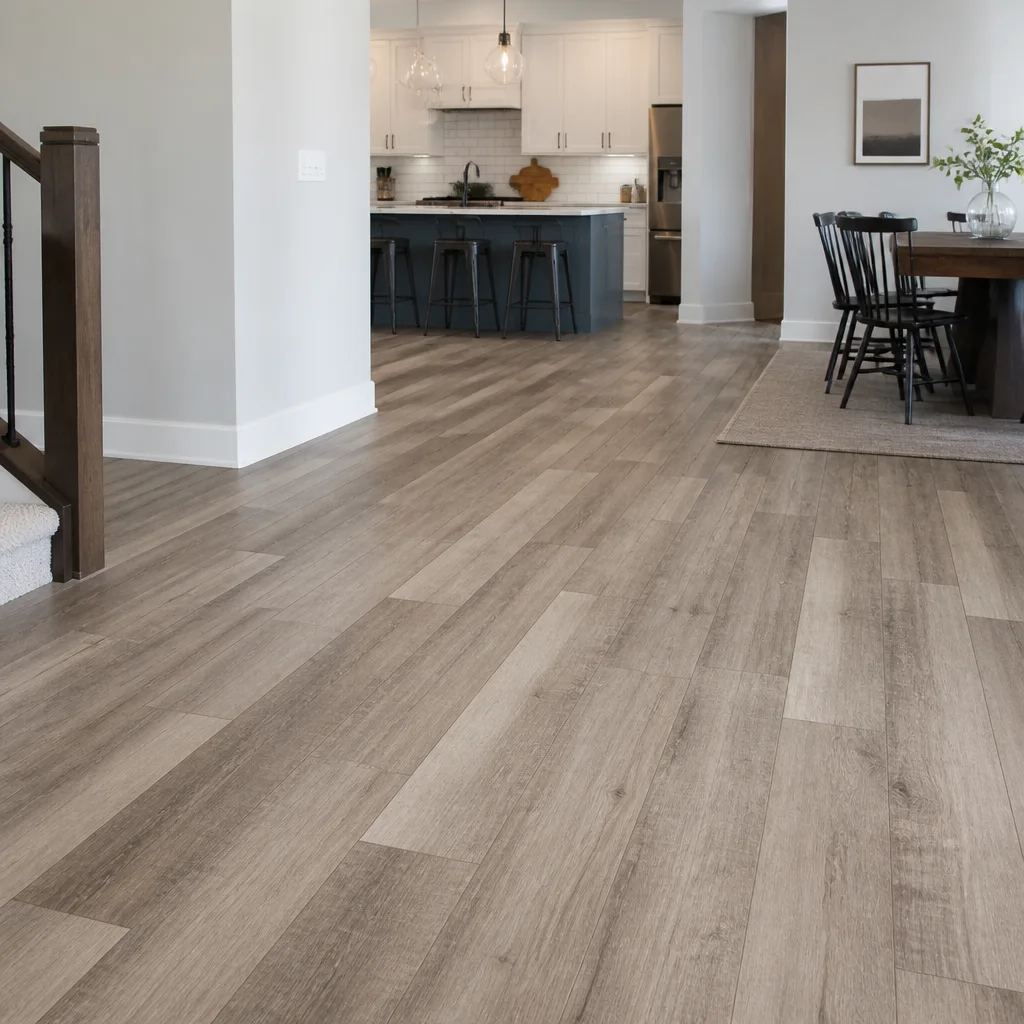 Pergo
Free in-home measure and written estimate: Shaw, Mohawk, COREtec and Pergo lines compared on your own rooms, with carpet, tile, vinyl plank, laminate and hardwood laid out side by side
Get your free estimateHardwood, Vinyl Plank, Laminate or Tile: How Spring Valley Homeowners Decide
Most flooring advice you’ll read was written for a house with four seasons and an average humidity somewhere in the forties. Spring Valley doesn’t work that way. Our summers push past 110°F, our indoor humidity can drop into single digits, and our homes sit on concrete slabs that stay cool and give off moisture differently than a wood-framed subfloor back East. That changes the math. The material that looks best in a showroom photo isn’t always the one that survives a decade here without gapping, cupping, or fading. Real hardwood isn’t off the table in the Las Vegas valley, but it demands a specific installation method and a humidity plan that most installers won’t bring up unless you ask. This guide walks through how each material actually behaves in Spring Valley conditions, what that costs you, and how to pick the floor that holds up to your life.
Styles & brands we work with
- Hardwood
- Engineered hardwood
- Luxury vinyl plank
- Laminate
- Porcelain tile
- Carpet
- Shaw
- Mohawk
- COREtec
- Pergo
Quick Answer
In Spring Valley, luxury vinyl plank and tile handle the climate with the least fuss. Laminate can work if you pick a strong core and a wear rating built for heavy traffic. Engineered hardwood outperforms solid hardwood on our slabs, while solid hardwood needs a humidity plan and the right nail-down or glue-down method to hold up. There’s no universal winner; the right floor depends on which room it’s going in, how hard your household lives on it, and how much maintenance you’re willing to live with.
Table of Contents
- Why Spring Valley’s Climate Drives the Decision
- Hardwood in Spring Valley: Solid vs. Engineered
- Vinyl Plank: The Real Strengths and the UV Weakness
- Laminate’s Durability Ceiling: AC3 vs. AC4
- Tile: The Honest Low-Maintenance Baseline
- Matching the Material to the Room
- How the Four Materials Compare on Cost
- Restore What You Have Before You Replace It
- Common Mistakes to Avoid
- When to Call a Professional
- Frequently Asked Questions
Why Spring Valley’s Climate Drives the Decision
Spring Valley sits in the Mojave basin, which means two forces work on every floor in every home here: extreme summer heat and near-zero ambient humidity. That combination creates a specific set of failure modes that homeowners from wetter climates don’t anticipate.
Wood, engineered or solid, moves with moisture. In a humid climate, it swells. Here, it shrinks. When the indoor relative humidity drops into the teens, wood planks lose moisture and pull back from each other. That’s where gapping comes from, those thin dark lines between boards that show up by late summer. The gap isn’t a defect; it’s the wood responding to dry air. It can close back up in the winter, or it can stay put if the moisture swing was severe enough.
Concrete slabs add another variable. Many Spring Valley homes are built on slab-on-grade, and that slab wicks moisture up from the soil even in dry weather. A wood or laminate floor laid directly on slab without a proper moisture barrier can cup or buckle from the bottom. We test for this at the estimate visit before we ever talk about which product is right.
Heat matters differently. Near west- and south-facing windows, summer sun hits flooring at a low angle for hours. That’s where fade shows first, and it’s the reason a material that looks flawless in the middle of a room can look washed out by the slider.
What this filters, fast
- Solid hardwood is viable, but only with a moisture-management plan and the right installation method.
- Engineered hardwood tolerates the slab and humidity swings better because its core is more dimensionally stable.
- Vinyl plank is largely immune to humidity, but vulnerable to UV fade in sun-exposed rooms.
- Tile is indifferent to both heat and humidity, which is why it keeps showing up as the answer.
That’s the real filter. Before you fall in love with a color, know which of those four conditions your specific room will hit hardest. If you want to see how we think about this across the whole valley, the Spring Valley service overview lays out the neighborhoods and home types we work in.
Hardwood in Spring Valley: Solid vs. Engineered
Short answer: engineered hardwood is usually the better bet on a Spring Valley slab, and solid hardwood is workable but costs more to do right. The difference isn’t quality, it’s how each one handles moisture and heat movement.
Solid hardwood is milled from a single piece of wood. It’s beautiful, it can be refinished multiple times over its life, and it feels substantial underfoot. But it moves more than engineered, and on a concrete slab your only realistic installation options are glue-down or a floating system over a barrier. Both demand careful moisture control. If the slab reads wet or the indoor humidity isn’t managed, solid wood will cup or gap within a couple of seasons.
Engineered hardwood uses a plywood core with a real wood veneer on top. The cross-layered core resists the dimensional movement that solid wood suffers in dry air. That makes it far more forgiving on slabs and in rooms with big windows and heat gain. It can usually be refinished, though how many times depends on the thickness of the veneer, which we check at the estimate visit before making any promises.
What engineered costs you compared to solid
In our experience, engineered hardwood often lands in a similar range to solid at the low end and can run higher at the design end, because premium engineered lines with thicker veneers and better finishes command a real premium. Solid wood costs less on the material side in entry-level grades, but the installation method required on a slab (glue-down with moisture mitigation) can narrow or erase that gap. The written estimate is the only number that matters, and it depends on the room, the subfloor, and the product you choose.
The humidity plan
If you go solid hardwood in Spring Valley, budget for a humidity plan: a whole-home humidifier in the dry months, or at minimum a way to keep indoor relative humidity from swinging wildly. That’s the trade. Engineered buys you more tolerance. Solid buys you more refinishing runway. Neither is “better”; they solve different problems.
Vinyl Plank: The Real Strengths and the UV Weakness
Luxury vinyl plank, or LVP, is the most popular choice in Spring Valley homes right now, and for good reason. It doesn’t care about humidity. It handles spills and pet accidents without damage. It’s warm underfoot compared to tile, and it’s quiet. For households that live hard on their floors, LVP is often the honest recommendation.
But LVP has one weakness here that gets glossed over: UV fading. In a room with a west- or south-facing window and no shade, sun hits the floor for hours every afternoon. Over time, the color can shift where the sun lands, leaving a visible “shadow” of furniture or a stripped pattern near the glass. Not all LVP fades equally. Core construction and the wear layer matter, and some product lines are built with better UV stability than others.
Which core constructions hold up better
- SPC (stone-plastic composite) cores are denser and typically more dimensionally stable. They tend to resist heat-related movement better in a room that gets hot sun.
- WPC (wood-plastic composite) cores are softer and warmer underfoot, but they can be more sensitive to heat gain in a sun-baked room.
- Rigid-core planks with a strong wear layer generally hold their color better than thin, budget vinyl in high-sun spots.
We carry LifeProof and COREtec, two lines that households with kids and pets ask for by name, and we’ll be straight with you about which of their lines are built for the sun exposure in your specific room. For the wider selection, including Spring Valley Floors product options across all four categories, that’s where we start the conversation.
One more thing about LVP: it’s water-resistant, not waterproof. Standing water from a slow leak or a flooded laundry room will still find a seam and get under the plank. Moisture from below the slab still has to be handled. Don’t let a “waterproof” label on a box convince you that you can skip the moisture barrier under it.
Laminate’s Durability Ceiling: AC3 vs. AC4
Laminate gets a bad rap partly because the cheapest laminate sold in Spring Valley big-box aisles is the version most homeowners try first. That’s the wrong sample to judge the category by. Laminate has a real durability ceiling, and it’s set by its wear rating, expressed as an AC number.
The AC rating (Abrasion Class) runs from AC1 to AC5. AC1 and AC2 are for light residential use. AC3 is rated for heavy residential traffic. AC4 is rated for commercial use, which makes it more than enough for a busy home. For a Spring Valley household with kids, dogs, and a household that wears shoes indoors, AC3 is the floor of what we’d recommend, and AC4 is often the smarter call.
Why budget laminate fails faster in desert homes
Budget laminate tends to be thin, with a low-density core and a thin wear layer. In a dry desert climate, that core absorbs and releases moisture faster, leading to edge swelling and separation. Combine that with a low AC rating, and you get a floor that looks worn within a couple of years under real traffic. Wet spills that sit on a laminate seam (a dropped glass of water, a pet accident overnight) can swell the core in a way that doesn’t happen with LVP.
Better laminate, meaning an AC4 core with a moisture-resistant backing and a tight click system, holds up far better in Spring Valley conditions. Pergo and Mannington both make laminate lines that sit in that better tier. The point is: laminate can absolutely be the right answer here. It just needs to be the right laminate.
Tile: The Honest Low-Maintenance Baseline
Tile is the material we recommend most often when a homeowner’s real priority is a floor they don’t have to think about. It’s indifferent to humidity. It’s indifferent to heat. It doesn’t fade near a sunny window. It doesn’t gap, cup, or swell. And it lasts.
The tradeoff is how it feels and behaves. Tile is hard and cold underfoot, which matters in a bedroom or a family room where kids play on the floor. It’s unforgiving to dropped glass and can crack if the slab under it moves or a heavy object lands on a corner. Grout lines require occasional cleaning, and lighter grout in a kitchen or entry sees dirt faster than a good porcelain tile does.
If a homeowner comes in dreaming of a wood-look floor but describes their real life as messy, humid, or busy, we’ll often nudge toward wood-look tile. Modern porcelain tiles mimic wood grain convincingly, including the color variation and grain, and they give you the wood look without any of the moisture anxiety. That’s an honest recommendation, not a sell: your floor, your call, but you should know when tile is genuinely the right answer.
Our tile selection draws on Daltile, which is a professional-grade source that designers and contractors look for, and tile flooring installation is one of the three service lines we handle directly.
Where tile wins in Spring Valley
- Entryways and mudrooms that see dust, sand, and desert grit tracked in daily.
- Kitchens, where spills and dropped pans are part of the territory.
- Bathrooms and laundry rooms, where water is expected, not a defect.
- Sun-blasted rooms near west-facing sliders, where other floors fade.
Matching the Material to the Room
One-floor-for-the-whole-house is a lovely idea, but it rarely survives contact with how people actually live. Here’s how we’d think about it room by room in a Spring Valley home.
- Living room (big west window): a place where UV fade shows first. LVP with a strong wear layer, engineered hardwood, or tile are all reasonable. Avoid cheap laminate and low-grade vinyl.
- Kitchen: tile handles spills easiest. LVP is a strong second. Real wood needs more vigilance around the sink and dishwasher.
- Primary bedroom: feel matters. Carpet or engineered hardwood are the usual picks here. Solid hardwood also works if you’re willing to manage humidity. If you’re leaning toward carpet, our carpet installation page covers what to consider in dry climates.
- Hallways and stairs: highest traffic per square foot. AC4 laminate, engineered hardwood, or dense LVP where you need durability.
- Bathrooms and laundry: tile. Not a close call.
- Sunroom or enclosed patio: tile or a UV-stable LVP. Anything wood-based will suffer.
The instinct to unify the whole house is understandable, and where a single material flows from room to room it feels right. The question is whether the material that’s right for the living room is also right for the bathroom. Often it isn’t, and that’s fine. Mixed floors that connect at doorways and transitions are the norm, not the exception, in Spring Valley homes.
How the Four Materials Compare on Cost
Cost comparisons get slippery fast. Material cost varies widely by product line, installation method depends on the subfloor and room, and the finishes and trim add up. Below is how we frame the typical ranges for a Spring Valley project, understanding that the written estimate is the number that sets the final price.
| Material | Climate Fit | Traffic Durability | Relative Cost |
|---|---|---|---|
| Tile (porcelain) | Excellent: indifferent to heat and humidity | Very high | Highest material cost, but long service life |
| Engineered hardwood | Good with slab-appropriate install | Good | Mid to high |
| Solid hardwood | Viable with moisture plan and correct method | Good, refinishable | Mid to high, variable install cost |
| Luxury vinyl plank | Excellent except UV-fade in sun rooms | High | Low to mid |
| Laminate | Good with AC3 or AC4 in a dry climate | Moderate to high (rating-dependent) | Low to mid |
Two things drive the number more than the material choice. First, whether the slab needs moisture mitigation or floor leveling, which is common in Spring Valley and adds real cost. Second, whether the existing floor has to come up first. Neither of those facts shows up in a per-square-foot ad, which is why we measure in person and put the number in writing before anyone commits.
Restore What You Have Before You Replace It
Before you replace a hardwood floor, ask whether it can be refinished. Many can. Refinishing sands down the worn surface and applies new finish, giving you the look of a new floor without the material cost or the tear-out.
The catch: whether it works depends on how much thickness the wood has left. Sanding removes material each time, and a floor that’s been refinished twice before has less runway than one that’s never been touched. We check that at the estimate visit. Not every floor can be refinished, and we won’t promise a stain will match a sample exactly. But where refinishing is possible, it’s often the smart move, especially if you love the wood you already have and just need it to look better.
Signs refinishing may be right for your floor
- The wood is dull, scratched, or gray but structurally sound.
- You have a wood floor in a room you’d otherwise be tempted to replace with tile or LVP.
- The wear is surface-level, not through to the underlayers.
- You want to keep the existing character of the home.
Hardwood refinishing is a service we handle directly, and it’s the option worth checking before you decide a wood floor is finished. Restore what you have; replace only when it’s genuinely time.
Common Mistakes to Avoid
- Choosing the product by color alone. A beautiful floor that can’t handle your sun, your slab, or your traffic is a frustration, not a finish. Start with the room’s conditions, then narrow the color.
- Treating “waterproof” as unlimited. LVP resists water, but standing water and moisture from below still have to be handled. A moisture barrier under the floor is not optional on most Spring Valley slabs.
- Buying the cheapest laminate on the aisle. An AC1 or AC2 laminate in a busy desert home will show wear within a couple of seasons. Go AC3 or AC4 or move to a different material.
- Ignoring UV fade near west-facing windows. If the room gets hours of afternoon sun, pick a floor rated for it. Fade is permanent.
- Laying solid hardwood on a slab without a humidity plan. Wood in this climate will gap or cup without one. That’s not the wood’s fault; it’s a planning failure.
- Replacing a refinishable floor. If the wood is thick enough to sand, refinishing is usually less expensive and less disruptive than a full replacement. Have it checked before you decide.
- Letting a per-square-foot price drive the decision before the estimate. The number that matters includes the subfloor prep, transitions, and trim. Get it in writing from one source that handles the whole job.
When to Call a Professional
Some decisions you can make on your own. Flooring usually isn’t one of them, because the slab under your home is a variable you can’t see. Call us when:
- You’ve narrowed to two materials and want a written estimate before you commit.
- Your existing floor is soft, cupping, or gapping and you’re not sure whether it needs repair or replacement.
- You’re refinishing a hardwood floor and need to know if there’s enough thickness left.
- You’re planning a renovation across multiple rooms and need the materials to connect smoothly.
- You’re unsure whether the sun exposure in your main room will fade the floor you’re considering.
Spring Valley Floors offers free estimates in Spring Valley. Call (833) 734-5027. We answer 24/7. Fast dispatch from 7am to 7pm, Sunday through Friday. Nine brands, one specialist, and the whole job handled by one team: that’s how a flooring decision stays your call instead of the contractor’s.
Frequently Asked Questions
Yes, with the right method and a humidity plan. Solid hardwood needs glue-down or a floating system over a moisture barrier on a slab, plus indoor humidity management. Engineered hardwood is more forgiving and often the better pick for a Spring Valley home on concrete.
Gaps appear when indoor humidity drops and the wood shrinks. That’s normal in Spring Valley’s dry summer air. A whole-home humidifier or a way to keep humidity stable in the dry months is the fix; the gaps themselves are the wood responding, not a defect.
It can. West-facing windows with no shade expose flooring to hours of low-angle sun, and that’s where UV fade shows first. Not all LVP fades equally; core construction and wear layer matter. We’ll point you to product lines built for sun exposure in the room you have.
AC3 is rated for heavy residential traffic and AC4 is rated for commercial use. For a busy Spring Valley home with kids or pets, AC3 is the floor of what we’d recommend and AC4 is often the safer call. Cheap AC1 or AC2 laminate will wear quickly under real traffic.
When your real priority is a floor that doesn’t have to be managed. Wood-look porcelain tile gives you the appearance of wood with none of the humidity or UV concerns. If the room is a bathroom, kitchen, entryway, or sun-blasted living room, tile is often the honest recommendation.
Refinish if the wood is thick enough to sand and the wear is surface-level. Replace only when the wood is too thin to refinish again or has structural damage. We check thickness and condition at the estimate before recommending either path.
Call (833) 734-5027 to schedule a free in-home estimate. We measure the room, check the slab, and put the number in writing. The written estimate sets the final price; the phone quote is just a starting point to help you compare.
The Bottom Line
In Spring Valley, the flooring decision gets easier once you stop treating it as a beauty contest and start treating it as a climate-fit question. Tile wins on durability and indifference to heat and humidity. Luxury vinyl plank wins on comfort and household toughness, with a UV caveat near sunny windows. Laminate can perform well if it’s AC3 or AC4 and has a moisture-resistant core, and it can fail fast if it doesn’t. Hardwood, engineered or solid, is absolutely viable here if the install method and humidity plan are right. Nine brands, one specialist, and a team that handles the measure, the install, and the refinish in one place: that’s how a Spring Valley homeowner makes this call with confidence.
Call (833) 734-5027 to schedule your free estimate. We answer 24/7. Fast dispatch from 7am to 7pm, Sunday through Friday.
Written by the team at Spring Valley Floors.
See the difference
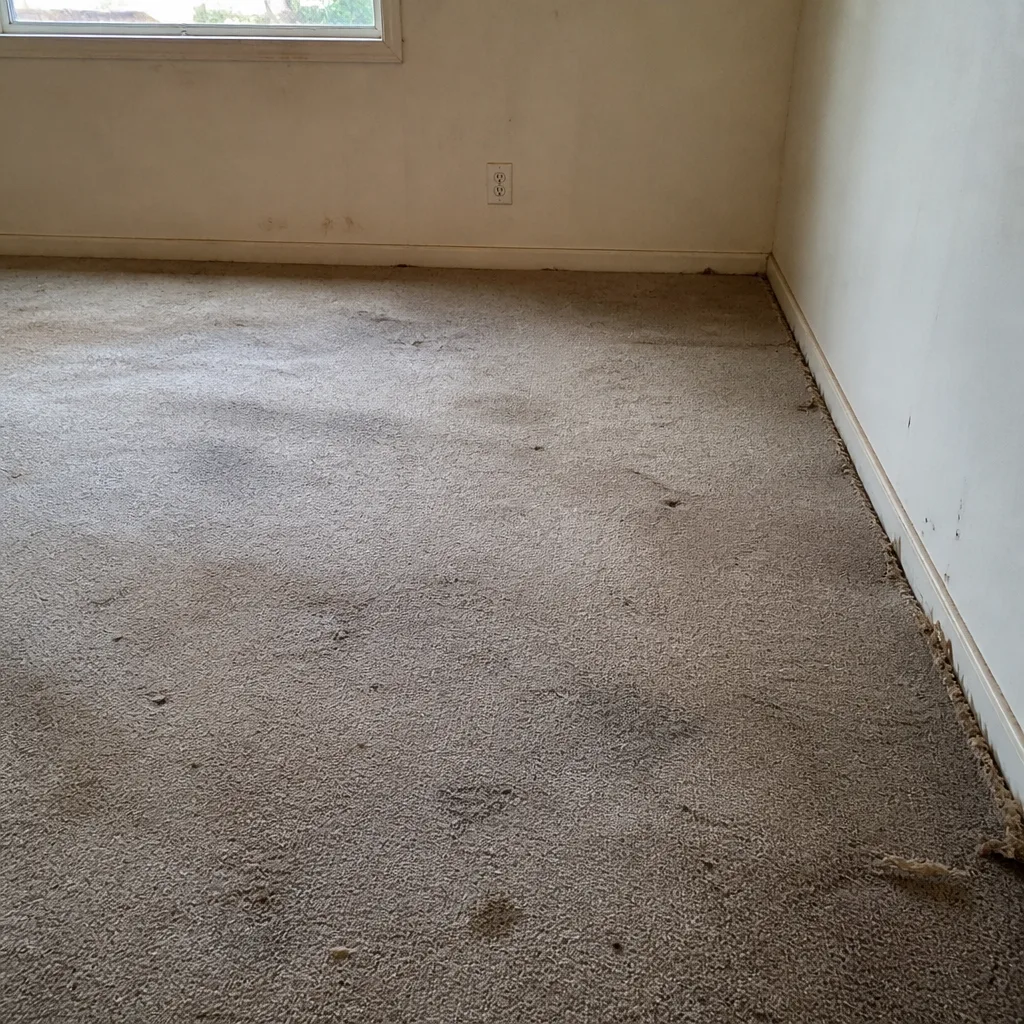
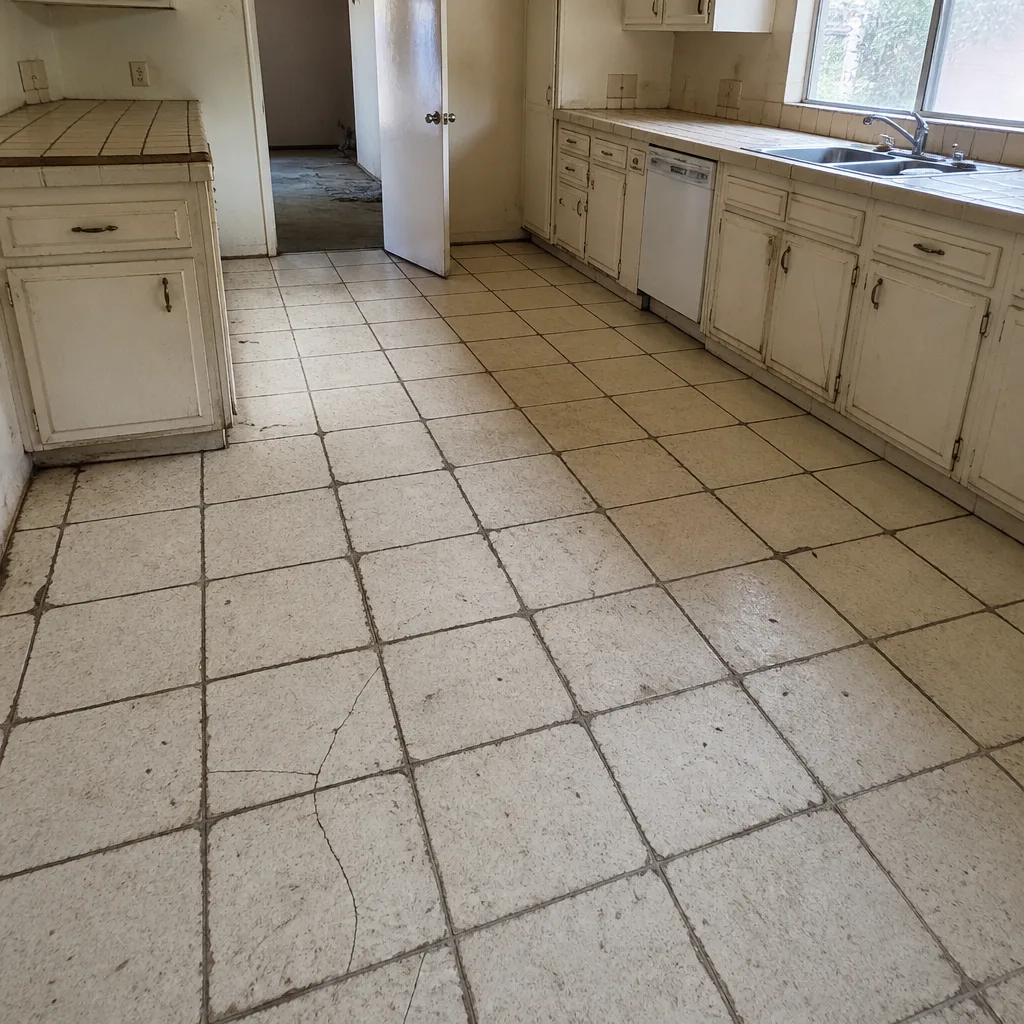
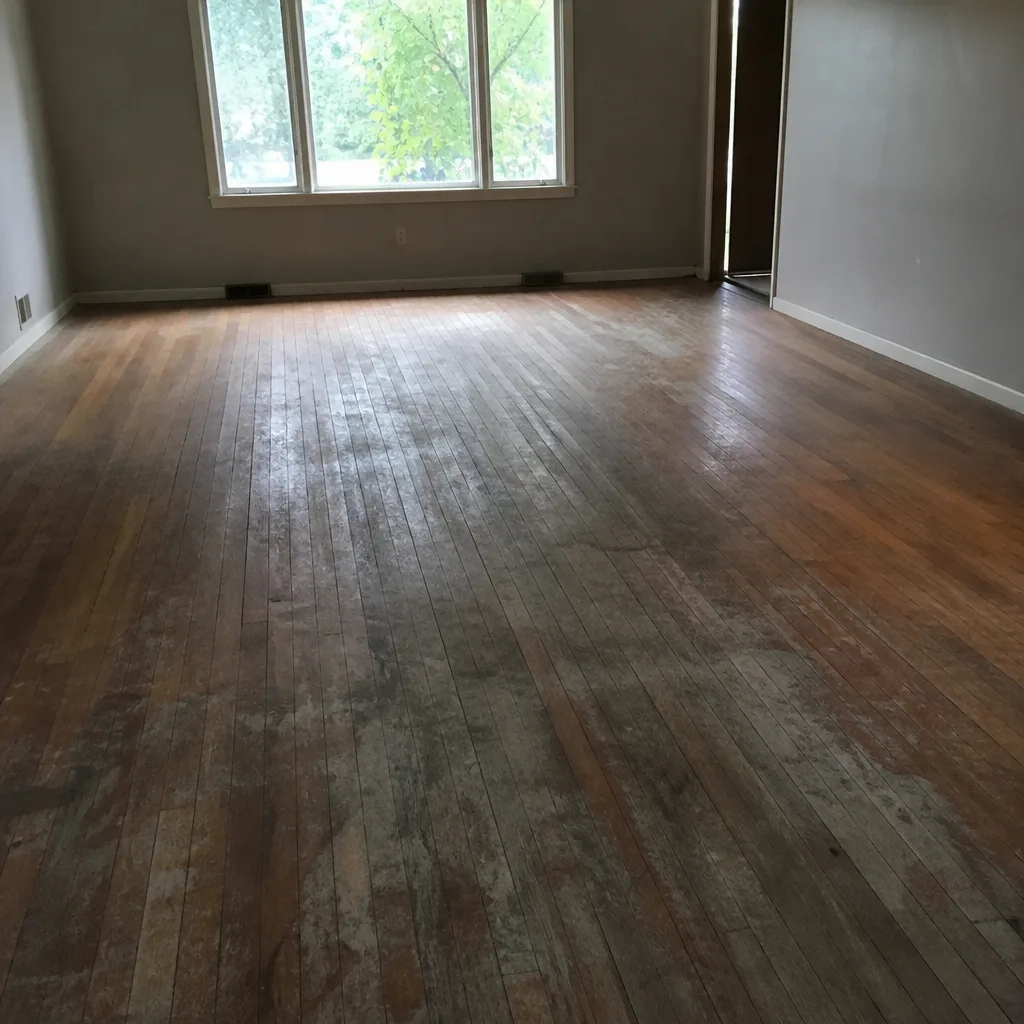 Before
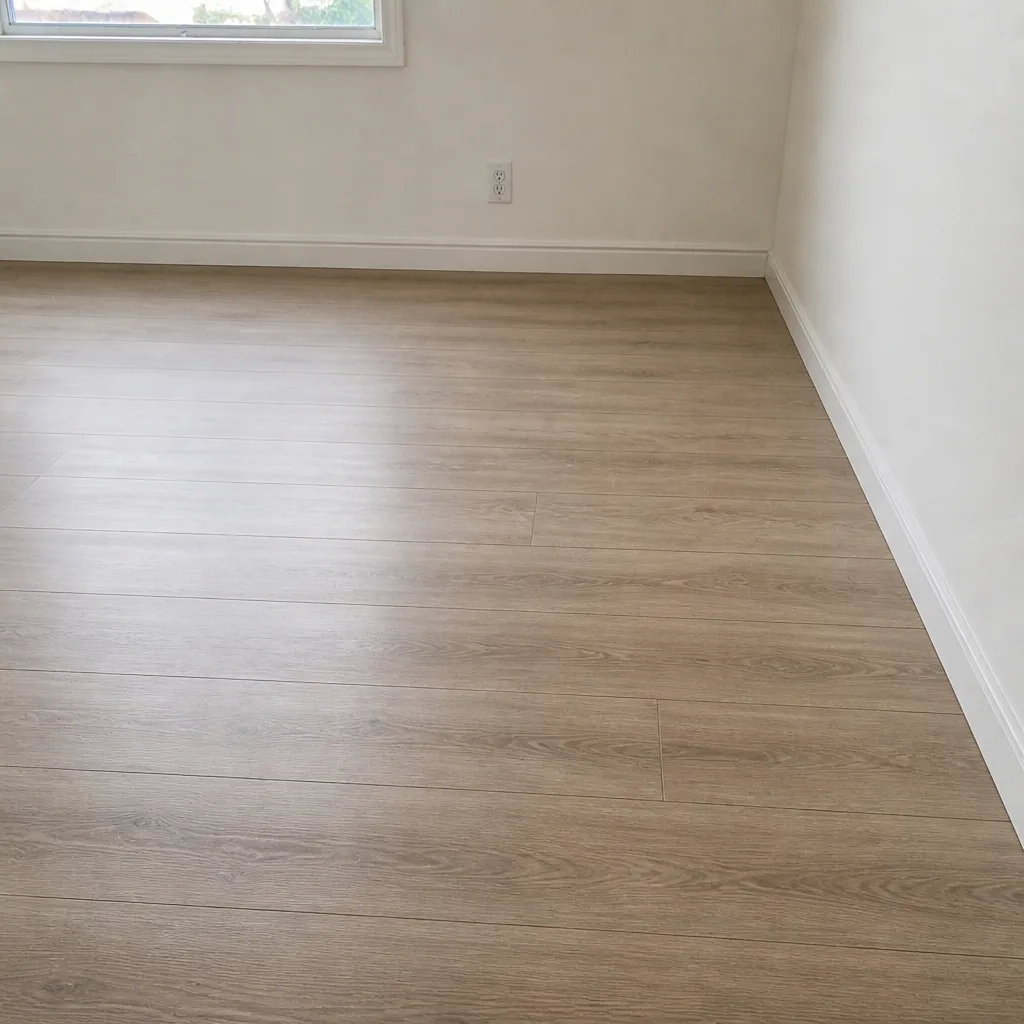
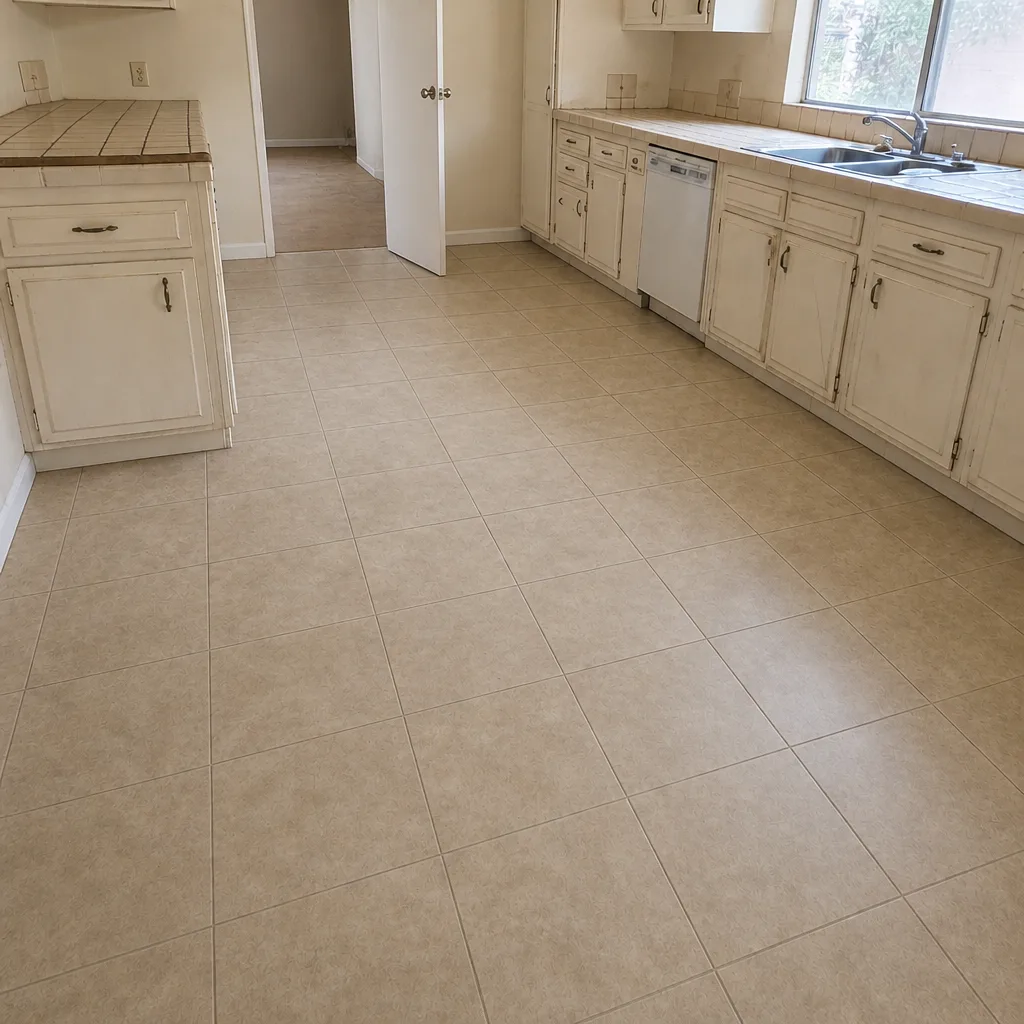
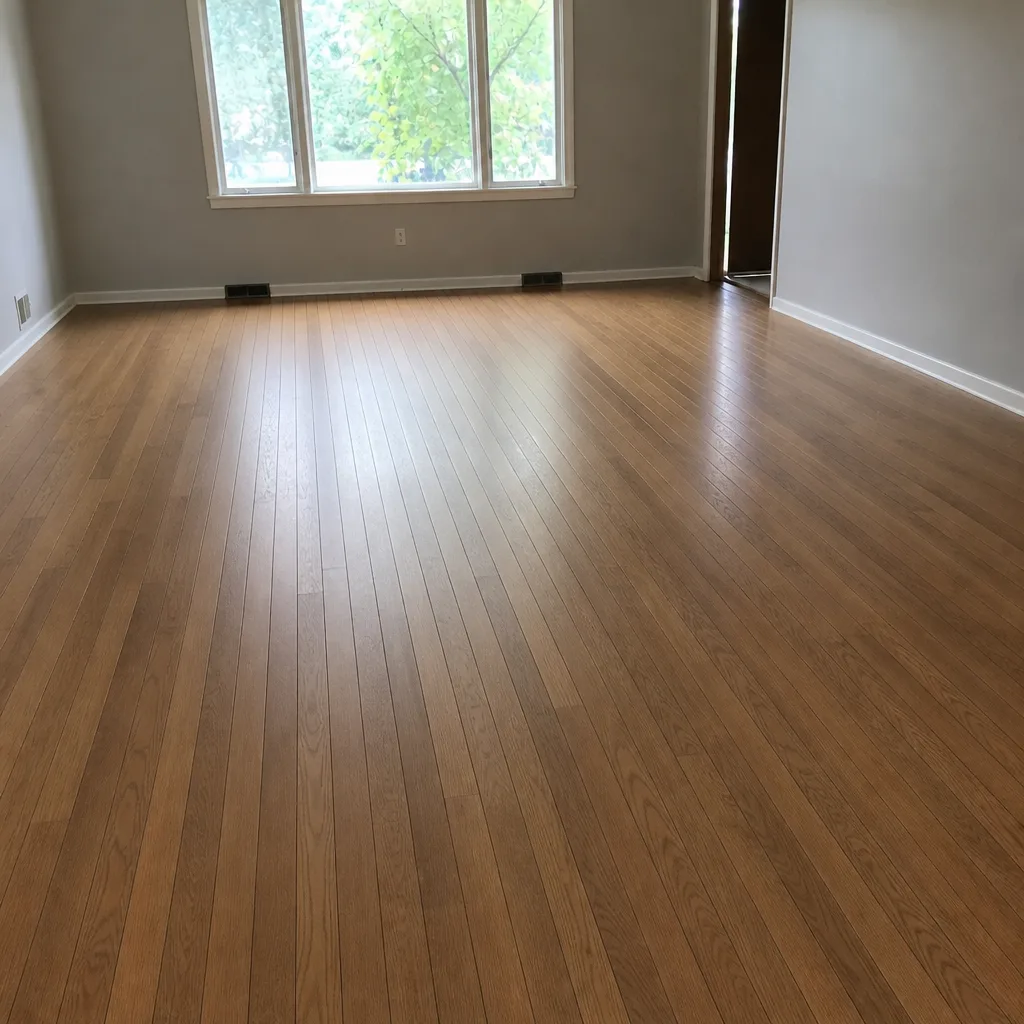 After
 Before
 After
 Before
 After